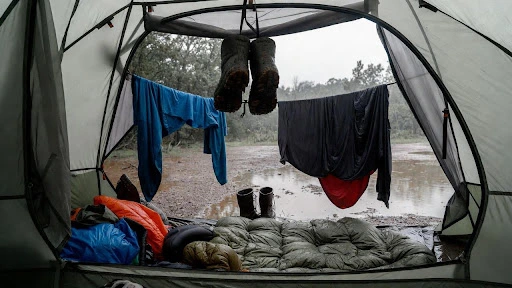
You finish a long day in steady rain, set up camp, and realize everything is soaked. Clothes clinging, boots heavy with water, sleeping bag damp from condensation or a leak. No dry change of clothes, no way to start a fire (or maybe fire bans are in place), and morning is hours away. Wet gear robs insulation, makes sleep miserable, and raises the risk of getting chilled. The good news is you can get a surprising amount of drying done overnight using body heat, airflow, and a few smart moves with what you already carry.
These methods work best in a tent or under a tarp with decent ventilation. They rely on wicking moisture away from insulation and using your own warmth to evaporate it slowly. Prevention always beats cure, so start there, then move to the fixes.
Table of Contents
Prevention: Keep Things as Dry as Possible from the Start
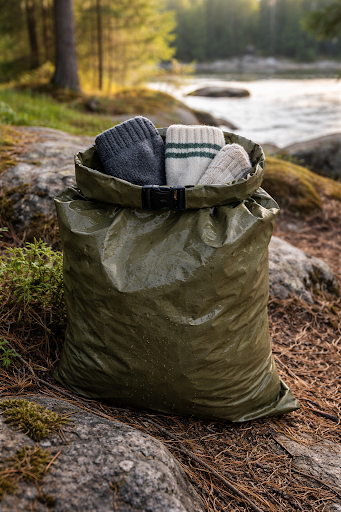
The best drying starts before the gear gets wet. Choose quick-dry synthetics or merino for base layers and socks-cotton holds water like a sponge. Pack a reliable rain jacket and pants, plus a pack cover or liner bag to shield the main compartment. Use waterproof stuff sacks or heavy-duty ziplocks for your sleeping bag and spare clothes so they stay dry even if the tent leaks.
Pick a campsite with good drainage-avoid low spots where puddles form. Pitch the tent with the door facing away from prevailing wind if possible. During the day, if rain lets up even for a bit, hang wet items on your pack or trekking poles to catch the breeze. Bring extras: one spare pair of socks and a dry base layer sealed away. These small habits cut down on how much you have to dry at night.
Drying Clothes, Socks, and Boots
Start by wringing out as much water as you can. Squeeze (don’t twist too hard though) shirts, pants, and socks over the tent vestibule or a rock. For boots, remove insoles and shake out loose water.
The most effective overnight method is body heat. Stuff damp socks or a thin base layer inside your sleeping bag against your torso, thighs, or feet-places where you generate the most warmth. Your body acts like a low-heat dryer; moisture transfers to the air inside the bag and vents out if the tent has airflow. Synthetic fabrics work better here than cotton because they release moisture faster. Change into the least-wet clothes for sleeping, then swap the dampest items in once you’re warm.
For boots, crumple dry socks, a bandana, or even toilet paper inside to absorb moisture. Place boots near the foot of your bag (not inside if they’re muddy) or in the vestibule if it’s sheltered. In the morning, swap the absorbent material again. A vapor barrier trick helps: wear a thin plastic bag (trash compactor liner or grocery bag) over your feet with dry socks on top-this traps heat close and speeds evaporation without soaking the bag.
Hang what you can inside the tent. String a short paracord line across the top or use existing guy lines. Position items near vents or open doors (if rain has stopped) to catch moving air. Avoid crowding-space lets moisture escape.
Drying the Sleeping Bag and Pad
A damp sleeping bag loses loft and warmth fast, so prioritize it. If it’s only slightly damp, fluff it thoroughly and sleep inside it with dry (or least-wet) clothes. Synthetic bags handle moisture better than down and dry quicker overall.
Use body heat again: wrap the dampest part of the bag around your core while sleeping, or place a damp section against your back or legs. The warmth pulls moisture out slowly. Keep the hood cinched to trap heat around your head. If condensation is the culprit (common in cold, humid nights), crack a vent or door slightly and point it downwind to let moist air escape.
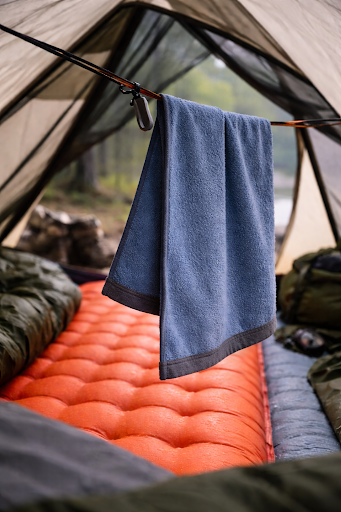
For sleeping pads, inflate fully so the loft stays high. If the pad got wet underneath, flip it so the damp side faces up toward your body heat. A closed-cell foam pad under an inflatable adds insulation and blocks ground moisture.
In the morning, shake the bag vigorously to redistribute fill, then air it out before packing.
Drying the Tent and Small Items
Tents pick up condensation inside even on clear nights, and rain adds more. Before bed, wipe down the inner walls and floor with a small pack towel or bandana to remove standing droplets. Leave doors and vents cracked if wind and rain allow-good airflow is key.
Small items like gloves, hats, or liners stuff easily into pockets or between bag layers to dry against your body. Hang them on the clothesline inside if space allows.
A microfiber towel or absorbent camp cloth helps everywhere-use it to blot gear before stuffing or hanging. Keep wet and dry items separated with ziplocks or dry sacks so moisture doesn’t spread.
These techniques won’t leave everything bone-dry by dawn, but they can cut dampness enough to stay comfortable and safe. Body heat plus airflow does the heavy lifting; quick-dry materials and good prevention make the difference between a rough night and a manageable one. Test the methods on a short trip or in your backyard so they feel natural when rain hits hard. Wet gear happens-knowing how to handle it keeps the trip going.