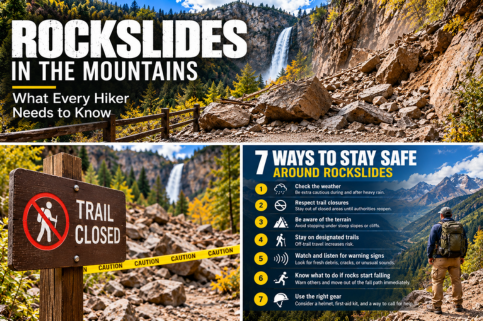
The mountains offer some of the most beautiful landscapes in the world, but they can also be unpredictable. Understanding the dangers of rockslides and knowing how to respond can help keep you safe on your next outdoor adventure.
A peaceful hike can turn dangerous in seconds. Loose rocks can break free from a mountainside, boulders can tumble across trails, and entire sections of a slope can collapse without much warning.
A recent incident near Bridal Veil Falls in Provo Canyon, Utah, is a powerful reminder of these risks. On October 23, 2026, a rockslide sent large rocks and debris onto a popular trail and park area, forcing authorities to close approximately a quarter-mile section near the falls. Several trees and some utility infrastructure were damaged. Fortunately, no injuries were reported, although rocks continued falling in the area after the initial slide.
According to local reports, heavy rainfall in the preceding 24 hours likely contributed to the incident. Some rain gauges in Provo Canyon recorded more than an inch of precipitation during that period.
The incident highlights an important lesson for anyone who hikes, climbs, camps, or explores the outdoors: Mountain terrain can change quickly, and knowing how to recognize potential hazards can make a critical difference.
Table of Contents
What Is a Rockslide?
A rockslide occurs when rocks, boulders, or larger sections of fractured bedrock break loose and move downhill under the force of gravity.
Depending on the terrain and conditions, this movement can range from a few individual rocks tumbling down a slope to a much larger event involving significant amounts of rock, soil, and vegetation.
Rockslides can happen in nearly any mountainous region. They are particularly concerning in steep canyons, beneath cliffs, along mountain roads, and on trails that pass below exposed rock faces.
Unlike some outdoor hazards, rockslides can be difficult to predict. A slope may appear stable for years before changing weather conditions or other forces cause rocks to break free.
Once a rock begins moving downhill, it may bounce, roll, or collide with other rocks, potentially increasing the amount of debris moving down the slope.
Even a relatively small rock can cause serious injuries if it strikes someone. Larger boulders can destroy trail infrastructure, damage vehicles, and block roads or access routes.
What Causes Rockslides in the Mountains?
Rockslides typically occur when the forces holding rocks in place are overcome by gravity. Several environmental factors can contribute to this process.
1. Heavy Rainfall
Rain is one of the most common triggers of rockslides and other slope failures.
When rainwater enters cracks and spaces between rocks, it can weaken the material supporting them. Water can also increase pressure within fractures and add weight to loose soil and debris.
As water moves through the mountainside, it can reduce the friction that helps keep rocks in place. When the slope can no longer support the material above it, rocks may begin to slide or fall.
This appears to have been a contributing factor in the October 2026 rockslide near Bridal Veil Falls. The incident occurred after heavy rainfall in Provo Canyon, demonstrating how a change in weather can destabilize an otherwise familiar outdoor area.
Safety takeaway: Be especially cautious around steep slopes and cliffs during and after heavy rainfall. Even when the rain stops, the ground may remain saturated and unstable.
2. Freeze-Thaw Cycles
Mountain temperatures often fluctuate around freezing, particularly during fall, winter, and spring.
Water enters small cracks in the rock and freezes when temperatures drop. As the water freezes, it expands and places pressure on the surrounding rock.
Repeated freezing and thawing can gradually enlarge these cracks until pieces of rock break away.
Over time, this process can create loose stones and unstable sections of exposed rock, increasing the likelihood of rockfall.
This is one reason mountain environments can be particularly hazardous during seasonal temperature changes.
3. Erosion and Weathering
Wind, flowing water, snow, and temperature changes slowly wear away rock and soil.
As erosion continues, it can remove the material supporting larger rocks or expose previously buried fractures. Rocks that once appeared secure may eventually become unstable.
Waterfalls, river canyons, and steep mountain slopes can be particularly vulnerable because water continually interacts with the surrounding landscape.
The danger is not always obvious. A large boulder may remain in place for decades before the conditions supporting it change enough for it to move.
4. Gravity and Steep Terrain
Gravity is the driving force behind every rockslide.
The steeper a slope becomes, the more difficult it can be for loose material to remain in place. Fractured rock, loose soil, and unstable boulders can move downhill when their supporting forces weaken.
Mountain trails that pass directly below cliffs or steep slopes may expose hikers to falling debris originating far above the trail.
This is why staying on designated trails is important. Moving off-trail can bring you into steeper terrain, loose rock, or areas that have not been assessed for visitor safety.
5. Human Activity
Human activity can sometimes contribute to rockfall.
Hikers and climbers may unintentionally dislodge loose stones, sending them down a slope toward people below. Road construction, excavation, and other activities can also disturb rock formations.
A rock that appears small near the top of a mountain can gain momentum as it travels downhill, creating a hazard for anyone in its path.
This is particularly important when hiking in groups or traveling along narrow trails above other people.
Safety takeaway: Never assume a rock is secure enough to step on, pull on, or move. Avoid disturbing loose rocks, especially when other people are below you.
How to Recognize Potential Rockslide Hazards
Although rockslides can occur without obvious warning, there are environmental conditions and warning signs worth paying attention to.
Before and during a hike, look for the following:
- Fresh rock debris: Newly fallen rocks or broken stone on a trail may indicate recent activity on the slope above.
- Cracks in exposed rock: Visible fractures can indicate areas where rock may eventually separate.
- Unstable slopes: Loose soil, crumbling rock, and clusters of unsecured boulders can signal potential hazards.
- Recent heavy rainfall: Saturated ground and weakened slopes can increase the likelihood of rock movement.
- Recent freeze-thaw conditions: Repeated temperature changes can loosen rocks, particularly in exposed mountain terrain.
- Unusual sounds: Cracking, grinding, or the sound of rocks striking one another may indicate movement above you.
- Official closures or warnings: Temporary trail closures often indicate hazards that visitors cannot safely assess on their own.
It is important to remember that these signs are not reliable predictors on their own. A slope can look stable and still release rocks unexpectedly.
The safest approach is to combine awareness of the environment with current weather information and guidance from local authorities.
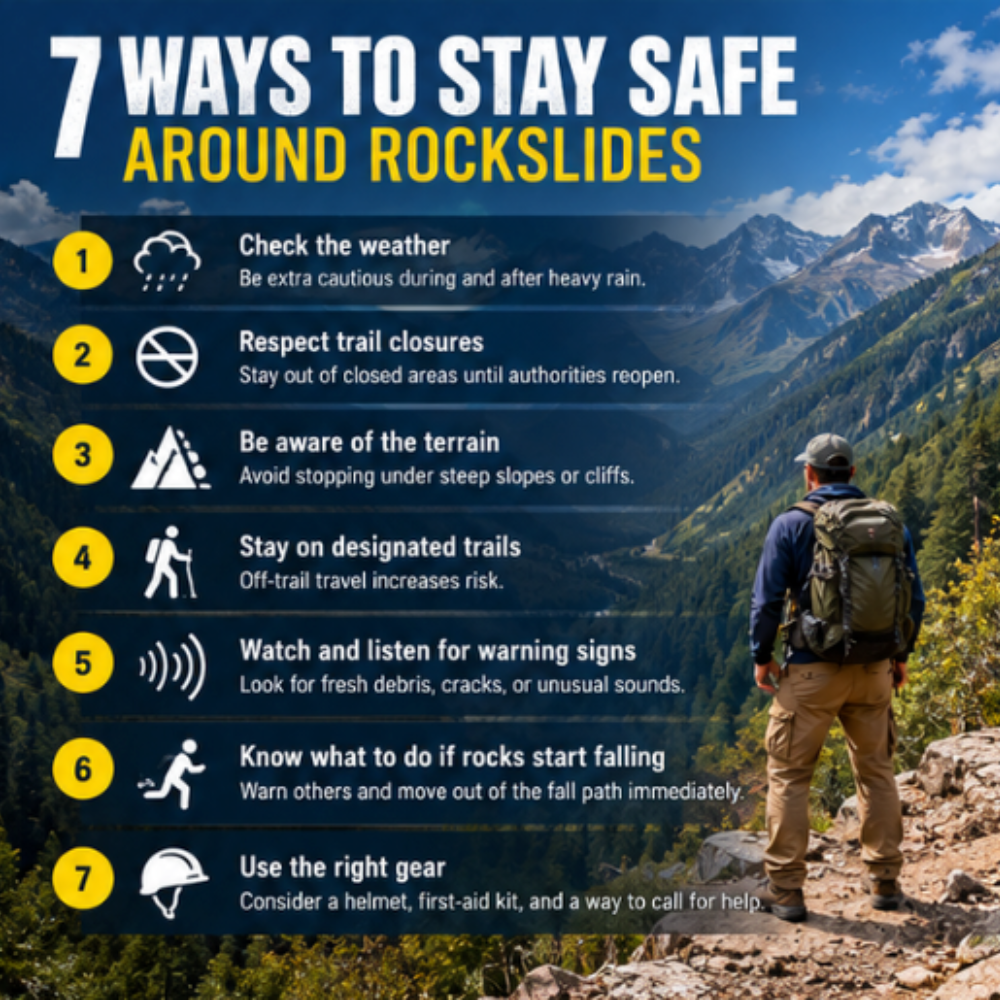
How to Stay Safe When Hiking in Rockslide-Prone Areas
You cannot eliminate every risk associated with mountain travel, but you can take practical steps to reduce your exposure to falling rocks and unstable terrain.
1. Check the Weather Before You Go
Weather conditions can dramatically affect mountain safety.
Before heading out, check the forecast for the specific area where you plan to hike. Pay attention to heavy rain, thunderstorms, snowmelt, and temperature fluctuations.
Remember that mountain weather can differ from conditions in nearby towns and cities.
If the area has experienced heavy rainfall or other significant weather events, consider choosing a different trail until conditions have been assessed.
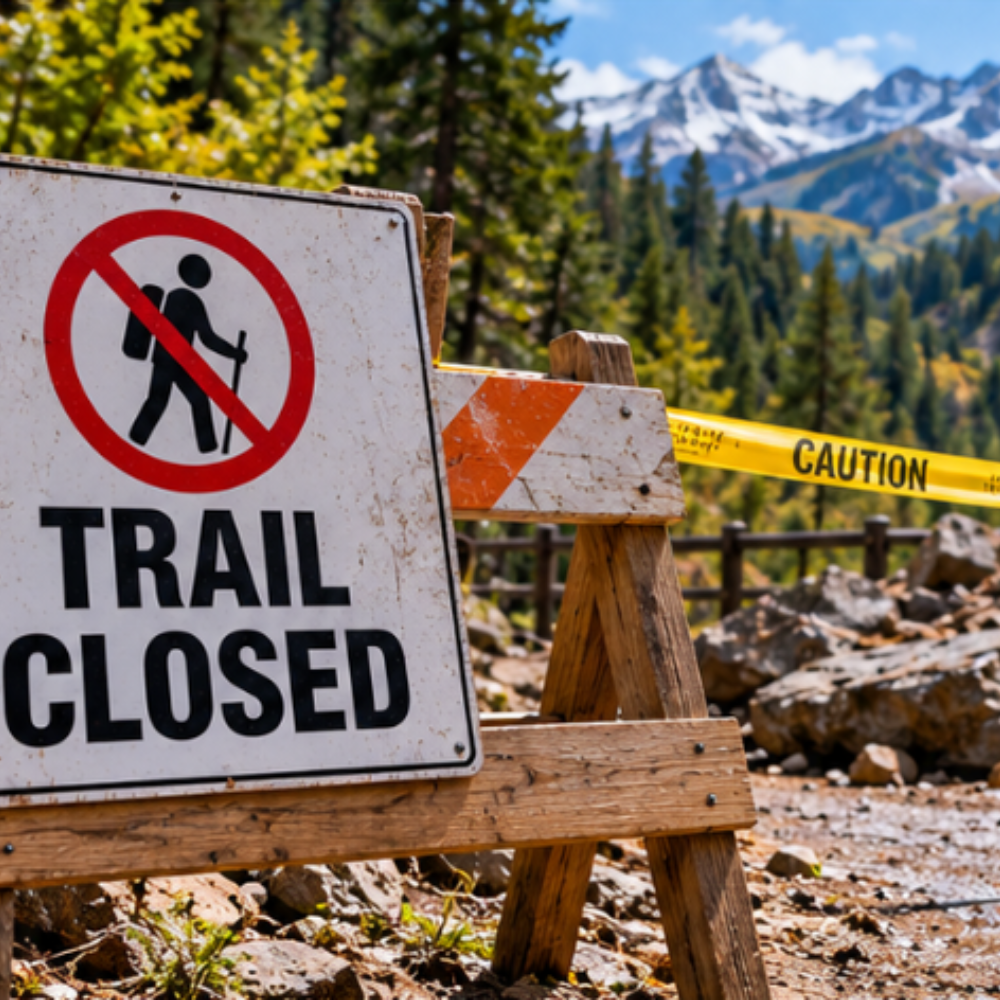
2. Respect Trail Closures
If authorities close a trail because of a rockslide, landslide, or unstable terrain, do not enter the area.
A closure is not simply about clearing debris from the path. Rocks may continue falling after the initial event, and the surrounding slope may remain unstable even after the trail looks clear.
Near Bridal Veil Falls, officials reported that rocks were still coming down after the October 23 slide. The closure was necessary to keep visitors away while the area was assessed and crews prepared to address the damage.
Walking around a barricade or entering a closed area can expose you to hazards that emergency personnel have specifically identified as unsafe.
Never assume a trail is safe because other people are using it or because the visible debris appears manageable.
Wait until the responsible authorities officially reopen the area.
3. Be Aware of the Terrain Above You
When hiking through a canyon or along the base of a cliff, remember that hazards can originate well above the trail.
Take note of steep slopes, exposed rock faces, and areas where loose debris could travel downhill.
Avoid stopping for extended periods beneath unstable cliffs or directly below slopes with visible loose rock when a safer location is available.
When choosing a rest stop, look for a location away from the base of steep slopes and outside obvious rockfall paths.
However, do not assume that moving directly against a cliff or farther down a slope automatically makes you safer. The safest route depends on the terrain, the direction of falling debris, and available escape options.
4. Stay on Designated Trails
Established trails generally provide a more predictable route than unmarked paths through loose or steep terrain.
Leaving the trail can take you onto unstable ground, where your footsteps may dislodge rocks or disturb loose material.
Stay on marked routes, follow posted instructions, and avoid climbing above trails unless you are on an appropriate route with the necessary training and equipment.
If you encounter fresh rock debris or signs of recent slope movement, do not continue into an area that appears unstable. Turn back when you can do so safely and report the hazard to the appropriate authorities.
5. Know What to Do If Rocks Begin Falling
If you hear rocks moving or see debris coming down a slope, act immediately.
Your priority is to get out of the path of the falling debris, not to stop and investigate.
Follow these steps:
- Warn others. Shout a clear warning such as “Rock!” so nearby hikers know there is a hazard.
- Move away from the fall path. If you can identify a safer direction, move quickly away from the area where rocks are landing.
- Seek suitable protection if escape is not possible. Depending on the terrain, a substantial, stable rock outcrop or other solid barrier may offer protection. Avoid moving blindly into another exposed area.
- Do not run uphill toward the source. Rocks can accelerate as they descend, and moving toward the slide may put you directly in danger.
- Keep moving away from the hazard when it is safe to do so. Additional rocks may follow the initial debris.
- Once clear, contact emergency services if anyone is injured or the area remains dangerous.
There is no single escape maneuver that works in every rockslide. Your best option depends on where the debris is moving and what safe terrain is available.
If you are hiking with children or a group, make sure everyone understands that falling rocks require an immediate response.
6. Carry the Right Safety Equipment
The right equipment can help you prepare for unexpected situations in the mountains.
Consider carrying:
- A properly fitted helmet for activities where falling rocks are a recognized hazard, particularly climbing and scrambling.
- A first-aid kit for treating injuries while waiting for help.
- A fully charged phone and, where cellular coverage is unreliable, a satellite communication device.
- Navigation tools, such as an offline map or GPS device.
- Sufficient water, food, and weather-appropriate clothing in case your trip takes longer than expected.
A helmet can reduce some head-injury risks, but it cannot protect you from every falling rock or a large rockslide.
Equipment is a supplement to good decisions, not a substitute for avoiding hazardous terrain.
7. Do Not Return Too Soon After a Rockslide
One of the most dangerous assumptions hikers can make is that a rockslide is over once the initial movement stops.
After a major slide, additional rocks may break free as the slope adjusts. Rainwater may continue moving through fractures, and loose debris may remain unstable.
The safest response is to leave the affected area and follow instructions from local officials.
Even if a trail looks clear, the surrounding mountainside may still pose a danger.
Allow trained personnel to assess the site and determine when it is safe to reopen.
What the Bridal Veil Falls Rockslide Teaches Us
The recent incident near Bridal Veil Falls illustrates several important lessons for outdoor enthusiasts.
First, popular trails are not necessarily risk-free trails. The area is a well-known destination in Provo Canyon, but its location beneath steep mountain terrain makes falling rocks a hazard worth taking seriously.
Second, weather can change the risk level of a familiar location. Heavy rainfall can weaken slopes and contribute to rock movement, even when a trail has been accessible for years.
Third, the danger can continue after the initial event. Officials reported continued rockfall following the October 23 incident, reinforcing the importance of respecting closures and allowing professionals to assess the area.
Finally, preparation and awareness matter. Checking weather conditions, understanding the terrain, recognizing warning signs, and knowing when to turn around are all important parts of responsible outdoor recreation.
The fact that no injuries were reported in this incident was fortunate. It is also a reminder that a rockslide can cause significant damage even when nobody is directly in its path.
Enjoy the Mountains, but Respect Their Power
Exploring the mountains is one of the best ways to experience the outdoors. From hiking and camping to climbing and sightseeing, these environments offer unforgettable opportunities for adventure.
But mountains are dynamic landscapes. Rainfall, erosion, freezing temperatures, and gravity continually reshape the terrain, sometimes with little warning.
You cannot predict every rockslide, and you cannot remove every hazard. What you can do is make informed decisions, pay attention to changing conditions, respect trail closures, and avoid unnecessary exposure to steep or unstable slopes.
Before your next adventure, check the weather, research your route, and make sure you understand the hazards you may encounter.
The best outdoor adventure is the one that brings you home safely.
Stay prepared, respect the terrain, and keep exploring.