Fall camping and hunting season overlap almost completely, and most campers don’t think about it until they hear a shot go off somewhere close by. Which is a bad time to start thinking about it.
I’m not a hunter. But I’ve spent enough time out in October and November to have figured out how to share the woods without it being a problem, and honestly most of it comes down to a few simple things you can sort out before you leave.
Table of Contents
Know If You’re Actually In It
First question: is hunting even allowed where you’re going? The answer varies a lot more than people assume.
National parks in the US generally prohibit hunting, but national forests and BLM land generally allow it. State and provincial parks are a coin flip, some prohibit it entirely, some allow it in specific zones during specific seasons. Wildlife management areas are usually open. So “I’m camping in a park” tells you almost nothing on its own.
Check with whoever manages the land before you go. If you’re on general public land, assume hunting is happening and plan around it.
Second question: what’s open right now? Season dates are set by unit or zone, and they vary by species and by weapon type. Deer gun seasons tend to fall somewhere in the October to December window across most of North America, but that’s a rough sketch and not something to plan around. Look up the current year’s regulations for the specific area you’re headed to. It’s free, it’s online, and it takes five minutes.
Wear Orange, Even Though You Don’t Have To
Most jurisdictions require hunter orange for licensed hunters during firearms seasons. Almost none require it of you. Wear it anyway.
The hunter requirements give you a decent template for what actually works. Ontario, Canada, for example, requires solid hunter orange covering at least 400 square inches above the waist, visible from all sides, plus an orange head cover, and specifically excludes camo orange and open mesh. Other jurisdictions set similar standards. The reason camo and mesh don’t count is that they’re less visible, which applies to you too.
You don’t need to kit yourself out to hunter spec. A blaze orange vest and a hat covers you fine. But take the head cover part seriously, cause your head is often the most visible part of you through brush.
Orange your dog too if you’ve got one. A dog moving low through cover in the fall is exactly the shape and motion someone might mistake for something else. Orange vests for dogs are cheap and widely available.
Stay Findable
Stick to marked trails during firearms seasons. Hunters are generally aware of where trails are and where people are likely to be. Bushwhacking off into thick cover during deer season puts you somewhere nobody’s expecting a person.
Make noise. Talk, let your gear rattle a bit, don’t move quietly through the woods. Silent movement through brush is what game does. You want to sound obviously human.
Time of day matters more than people realize. Dawn and dusk are peak hunting hours and also the worst light for identifying what you’re looking at. If you’re going to be moving around outside your site, do it in the middle of the day when you can.
Your Campsite Is A Factor Too
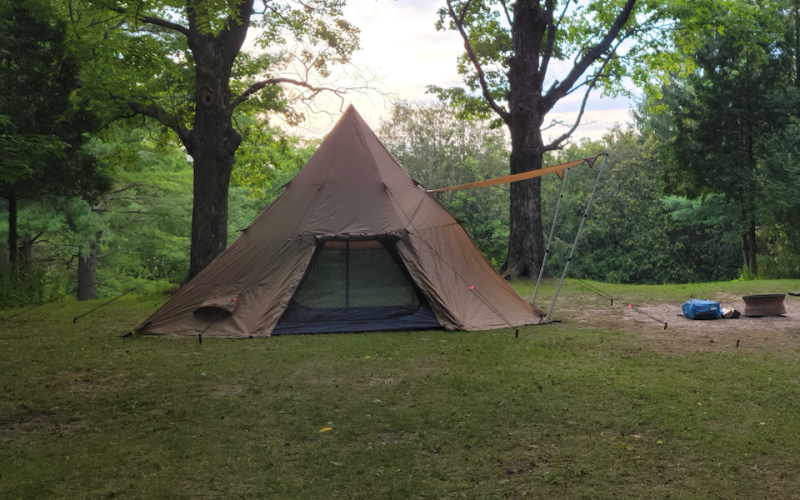
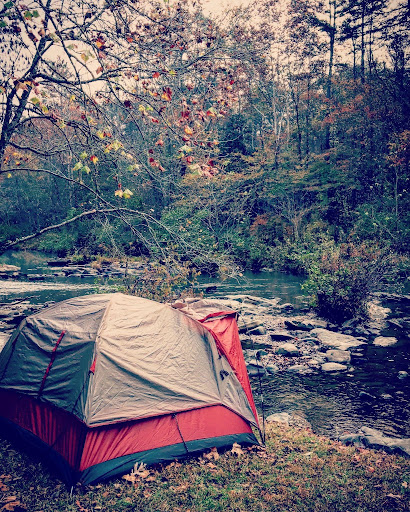
Pick sites with some open ground around them if you can, rather than tucking into thick cover. Being visible from a distance is the whole game here.
Some campers hang orange flagging or a bright tarp near their site during hunting season, which isn’t a bad idea on general public land where somebody might not know you’re there. You don’t need to make it a fortress. Just make it obvious a person is set up.
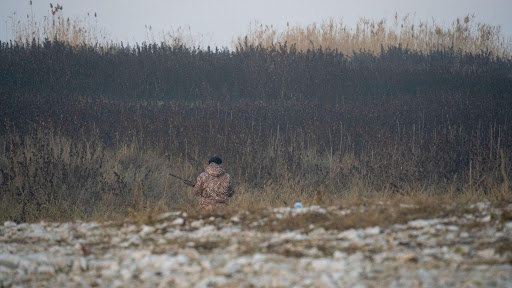
And this should be obvious but I’ll say it anyway. Don’t wear anything that reads as brown or white through brush. White in particular, cause a flash of white at the wrong height looks like a deer tail to someone who’s already primed to see one.
Hunters Aren’t The Problem
Worth saying plainly, because camping content sometimes gets weird about this. The vast majority of hunters are careful, licensed, trained people who follow the rules and who don’t want an incident any more than you do. Blaze orange requirements have dramatically reduced hunting-related firearms incidents wherever they’ve been adopted, and that’s largely because hunters took it seriously.
If you run into someone hunting, a normal friendly interaction is fine. They’re not going to be annoyed if you’re there. In my experience they’re usually happy to tell you what unit you’re in and what’s open, which is genuinely useful information.
The one thing I’d avoid is deliberately making noise or moving through an area to disrupt a hunt. Hunter harassment is illegal in most jurisdictions, and it’s a good way to turn a non-issue into a confrontation.
Final Thoughts
Look up whether hunting’s allowed where you’re camping. Check what seasons are open in that area. Wear orange, put orange on your dog, stay on trails, make noise, and don’t move around at dawn and dusk if you can avoid it.
That’s it. None of it costs anything or takes much effort, and it turns a thing people get nervous about into a non-event. Fall’s the best camping of the year in a lot of places. Sharing it with hunters isn’t a reason to stay home, it’s just something to prepare for like anything else.