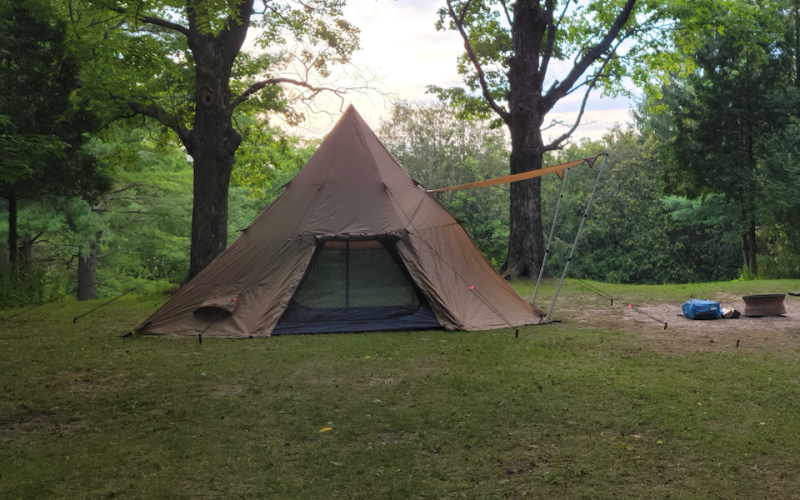
Short answer, yes. Slightly longer answer, yes but there are a few trips where I’ve regretted bringing mine, so it’s worth talking about when it works and when you’re better off with something else.
The reason people assume hot tents are winter-only is the stove. Which is fair, that’s the whole selling point. But the tent doesn’t care what month it is. Pull the stove out, cap the jack, and what you’ve got is a big canvas or poly shelter with a lot of interior space.
Dropping the stove also sheds a serious amount of weight. My steel stove and pipe is easily the heaviest single thing in that whole kit. Without it I’m carrying a tent, poles, and stakes, which is a load I can actually live with.
Table of Contents
Getting Air Moving
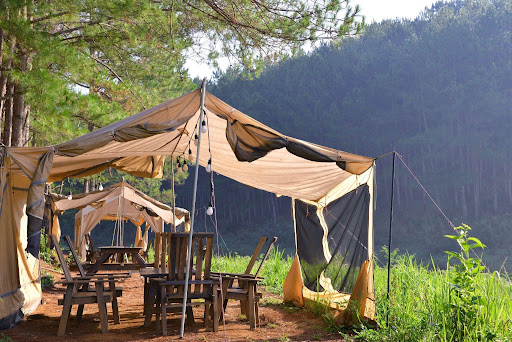
Here’s where the specific tent you own matters a lot. These things are built to trap heat. That’s the design goal. So summer performance comes down almost entirely to how many ways you can open it up.
Door count is the thing I’d look at first. Two or more doors means you can tie everything back and get air moving straight through the middle of the tent. One door means air comes in and mostly just sits there. If you’re shopping for a hot tent and you plan on using it past March, I’d weigh the door count higher than most of the specs people obsess over.
Peak vents help too, since heat’s going up anyway and it needs somewhere to go. Some stove jacks open rather than sealing permanently, which gives you another vent for free. And if your tent lets you roll the skirt or the lower sides up, use it. That’s where you’ll feel it most, cause that’s where you’re lying.
Mesh Inners
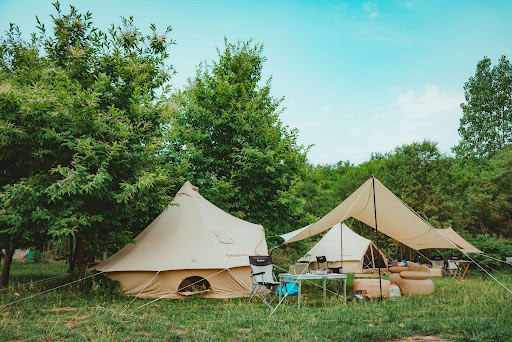
If your tent came with a mesh inner, or you can buy one for it, that’s most of the problem solved. Doors wide open all night, no bugs, air moving.
Ontario, Canada in the summer is not a place where you can skip bug protection. Blackflies in early summer are their own kind of misery and I’ve had trips where they were worse than any weather I dealt with. Mosquitos, deer flies, and horseflies occupy the majority of the mid to late summer and they can make your life a hassle.
Having a mesh inner means you get all that floor space to sit up in and move around without being eaten alive, which is a lot more pleasant than tucking into a two-person backpacking tent and waiting it out.
Most of the bigger brands sell mesh inners separately if yours didn’t ship with one. Worth checking.
Canvas, Poly, and Color
Canvas breathes. It handles humidity better and it doesn’t turn into a sauna as quickly. It’s also heavy, so that’s the tradeoff and it’s not a small one.
Polyester packs down smaller and weighs less, but it doesn’t breathe at all. In direct sun a poly tent gets uncomfortable fast, and you’ll deal with more condensation on top of that.
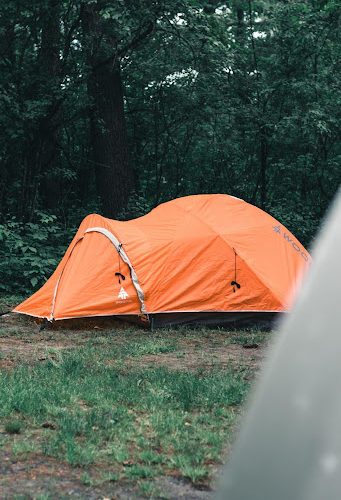
Color is another aspect to pay attention to. A dark green or black tent soaks up heat. Tan or light grey doesn’t, not to the same degree. If you’re buying with summer in mind, go for a lighter shade.
Where You Pitch It
With a normal three season tent, shade is a nice-to-have. With a hot tent it’s closer to being required. There’s more air volume inside and the fabric is heavier, so once the thing heats up it holds that heat for a while.
Get under tree cover, and think about morning sun specifically. A site that’s shaded and comfortable when you roll in at seven can be brutal by eight the next morning. I’ve been chased out of my own tent by heat before and it’s not a great way to start a day.
When I Leave It At Home
If I’m walking any distance, the weight math stops working. A hot tent and poles is meaningfully heavier than a three season tent, and without the stove doing anything for me, I’m hauling that for interior space I might not need.
Dead still heat is the other one. Airflow only helps if there’s air. On a windless thirty degree day the tent’s going to be warmer inside than a properly ventilated backpacking tent no matter how many doors I tie back.
And they’re slower to pitch. That’s a non-issue at a base camp. It’s more annoying on a one-nighter when you’re setting up in the dark.
Final Thoughts
Your hot tent doesn’t need to sit in a bin from May to October. Take the stove out, open it up, use the mesh inner, and find shade. That covers most summer conditions in this part of the country and many other places.
If you’re buying one and you want it to actually work year round, the things I’d prioritize are multiple doors, a mesh inner available, lighter coloured fabric, and real venting at the peak. Plenty of hot tents have two of those four. Fewer have all of them, and that’s the difference between a shelter you use all year and one that comes out when there’s snow.