Summer camping with kids is forgiving. If someone gets wet, they dry off. If bedtime slides two hours late, nobody freezes.
Fall takes most of that slack away. Bigger temperature swings, shorter days, and wet clothing that stays wet. That doesn’t make fall a bad season to bring kids out, it’s arguably better, fewer bugs and fewer crowds. The margin for error is just smaller.
Table of Contents
Kids get cold faster than you do
Children lose heat faster than adults because they have more surface area relative to their body mass. Younger kids also aren’t great at noticing they’re cold until they’re already properly uncomfortable.
So don’t use yourself as the gauge. If you’re fine in a fleece, a six year old sitting still at the picnic table is probably already cold. Check on them instead of waiting to be told.
The tells are hands, feet, and mood. Cold kids go quiet, whiny, or clingy well before they say anything. A sudden personality shift in a kid who was fine an hour ago is usually cold, hunger, or tiredness, and in October it’s often the first one.
Overpack the clothing
There’s a general rule about not overpacking, and for fall trips with kids I’d throw it out on clothing specifically.
Double the socks you think you need. Feet get wet constantly, kids don’t mention it, and dry socks solve a surprising number of problems. Same with hats and gloves, which get dropped and soaked.
A full change of clothes per kid per day isn’t excessive. Puddles, creeks, wet leaves, mud around the water tap. In July a soaked kid is nothing. In October it ends the trip.
Layers beat one thick coat. Base, mid, shell gives you something to adjust as the day moves. One heavy jacket means too hot or too cold with nothing in between. Avoid cotton next to skin, because it holds moisture and pulls heat out of them.
Sleep is where fall trips fail
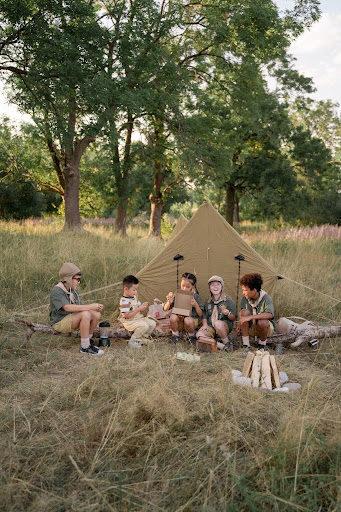
A cold night is what turns a kid off camping, and it’s the most underestimated part.
Bag ratings assume an adult producing adult heat. A bag rated to five degrees won’t keep a small kid comfortable at five degrees. Size well below the expected low, add a liner, or layer them inside it.
The pad matters as much as the bag and it’s what people forget. Cold moves out of a body into the ground much faster than into the air. A kid on a thin foam pad in October is going to be cold no matter how good the bag is. Check the R-value and get something insulated.
A hot water bottle in the bag before bed helps. So does a hat to sleep in and a dry set of sleep clothes that never get worn during the day. Damp day clothes carry moisture into the bag and work against them all night.
Plan around daylight, not the clock
Sunset at six changes the whole shape of a day with kids.
Get to the site early. Setup takes longer with kids, and doing it in the dark with tired ones is miserable. If you’d normally arrive at four, aim for one.
Move dinner earlier than feels natural. Cooking in the dark is slower and colder, and a hungry kid waiting in the cold is a bad combination.
Then actually plan the evening. There’s a long stretch between dinner and bedtime that summer doesn’t have. A fire, cards, glow sticks, a short walk. Kids do fine in the dark when there’s something to do in it. They do badly when the adults are just waiting for bedtime.
Give every kid their own headlamp. A light they control makes the dark feel a lot less like something happening to them.
Keep the first one short and close
One night an hour from home beats three nights somewhere remote. If it goes badly you’re home quickly. If it goes well you’ve got something to build on. Car camping over backcountry too, at least at first. Being able to retreat to a warm vehicle for twenty minutes has saved plenty of trips.
Let them be a little uncomfortable
The goal isn’t a trip where nothing is ever cold, cause that’s not camping and kids can tell when they’re being managed. Cold hands warmed up at a fire is a good experience. It teaches them discomfort is temporary.
The line is between discomfort they recover from and misery they can’t escape. Watch for the second one and the rest takes care of itself.