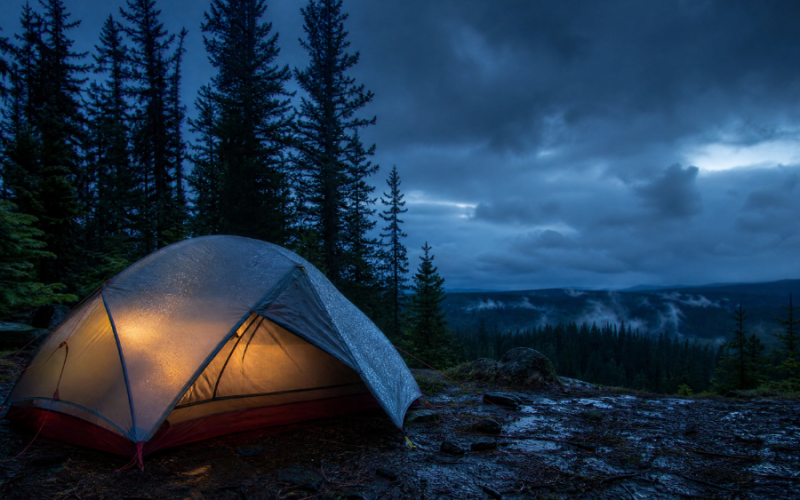
Anyone who camps regularly eventually gets caught in a storm they did not see coming. I have had trips where the forecast promised a clear evening and delivered a wall of wind and lightning by nine o’clock instead. Storms are just part of camping in this part of the world, and knowing how to handle one calmly makes a massive difference to how the night actually goes.
This is not a piece about avoiding bad weather altogether, cause that’s not realistic. It is about what to do when it finds you anyway.
Table of Contents
Lightning: There Is No Fully Safe Place Outside
This needs to be said plainly. There is no location outdoors that is genuinely safe during a lightning storm. A tent offers zero protection, none, and I mean that literally. What you can do is reduce your risk, and that starts long before the storm arrives.
Check the forecast carefully before you leave, and check it again closer to your departure time. Afternoon thunderstorms are common in the warmer months, so pay attention to that window specifically rather than just the overall chance of rain. If you can hear thunder, lightning is close enough to be dangerous. The old advice about counting seconds between flash and thunder is not something I would rely on. Hear thunder, you’re in range. Simple as that.
If a hard shelter or a vehicle is anywhere nearby, get to it. That is always the best option. If neither is available, avoid open fields, hilltops, and ridgelines where you would be the tallest thing around. Avoid tall, isolated trees too, since they are frequent lightning targets. If you are near water, get away from it immediately. Water conducts electricity efficiently and lightning current travels through it over long distances.
If you are genuinely caught with nothing better available, move to lower ground, a valley or a depression, and stay away from metal objects, wet ropes, anything that conducts. Do not lie flat on the ground, even though it feels like instinct. Crouching low with minimal contact is the better option, since ground current from a strike spreads outward and a larger contact area increases your risk. If you are with a group, spread out rather than clustering together, so one strike cannot take everyone at once.
After the storm passes, wait a full thirty minutes without hearing thunder before you go back to normal camp activity. Storms often move through in waves, and I have seen people head back out too early because the rain let up, only to get caught by a second round twenty minutes later.
Torrential Rain and Where You Set Up
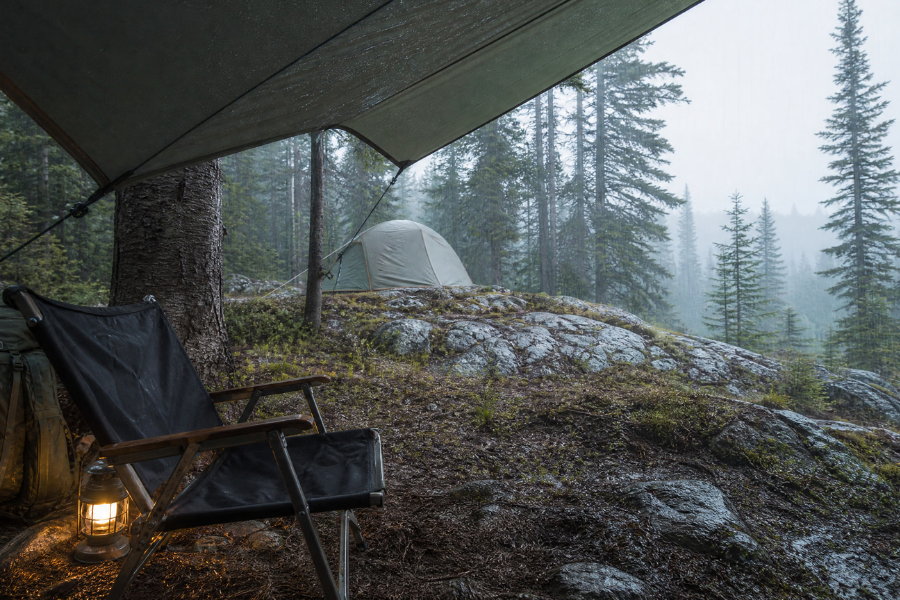
Heavy rain creates a different problem than lightning, and site selection is where most of that risk actually gets managed. This is the thing that separates an uncomfortable night from a genuinely bad one.
Avoid setting up in dry creek beds, drainage channels, or any depression that looks like it would collect and move water. These spots can look perfectly dry and appealing when you arrive. I have watched people set up in exactly this kind of low spot, tucked in and looking smart, only to have water moving through their site a few hours later. Water finds the lowest point fast, and a storm that dumps serious rain in a short window can turn a dry gully into a real hazard without much warning.
Look instead for slightly elevated, level ground with natural drainage away from your tent. A gentle slope is often better than perfectly flat ground, since flat ground with poor drainage is exactly where water pools and sits. Dig a small trench around your tent if you’re expecting heavy rain and the site has no built-in drainage, though a lot of managed campsites in Ontario have rules about this, so check first.
Keep an eye on nearby streams or rivers if you’re camping close to one. Water levels can rise faster than seems reasonable given what’s actually falling on your site, because rain further upstream adds to the flow. A site that looked comfortably back from the water’s edge in the afternoon can look completely different by morning after a hard overnight storm.
Widowmakers: The Threat Overhead
A widowmaker is a dead or partially broken branch, or an entire dead tree, still standing or hanging and ready to fall without warning. Wind is usually what brings them down, and a storm brings exactly the kind of wind that turns a widowmaker from background risk into an active one.
Before you set up camp, look up. Scan the trees directly above and around your site for dead branches, broken limbs caught in the canopy, or dead trees leaning nearby. Healthy trees with strong root systems handle wind reasonably well. Dead wood does not, and it doesn’t take a major storm to bring it down. Sometimes just one strong gust does it.
If you’re setting up in fading light or after a storm has already started, this step gets skipped more than it should. Usually because nobody wants to be the one standing around with a headlamp looking up while everyone else just wants to get in their tent. Take the extra two minutes anyway. A widowmaker coming down on an occupied tent is a genuinely serious outcome, and it’s one of the easiest risks to avoid just by looking up before you commit to a spot.
Final Thoughts
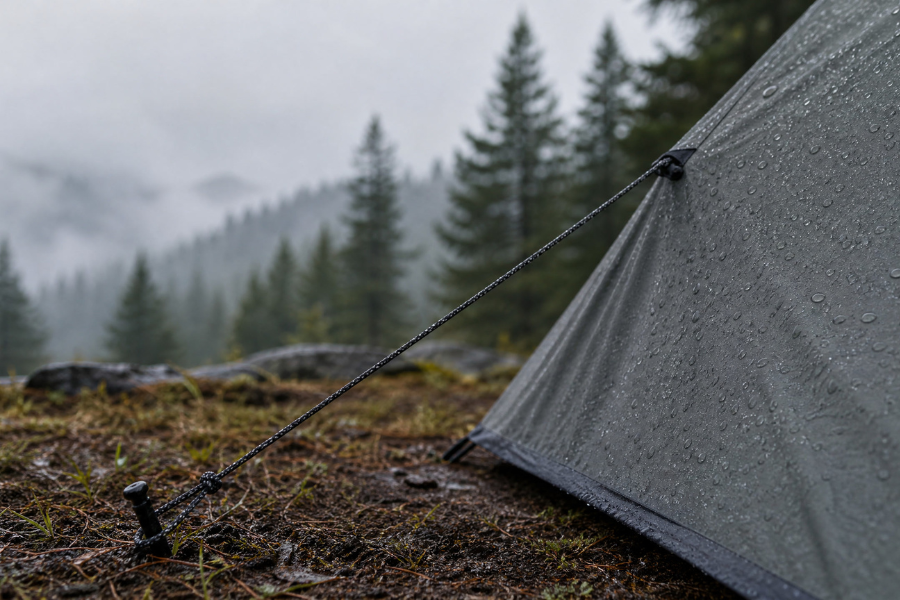
Storms aren’t something to be afraid of every time you camp, but they deserve real respect. Check your forecast honestly, choose your site with drainage and overhead hazards in mind, and know your lightning plan before you need it rather than figuring it out mid-storm. Most storms pass without incident. The people who avoid trouble are usually the ones who made a few smart calls before the weather ever turned, not the ones who just got lucky in the middle of it.