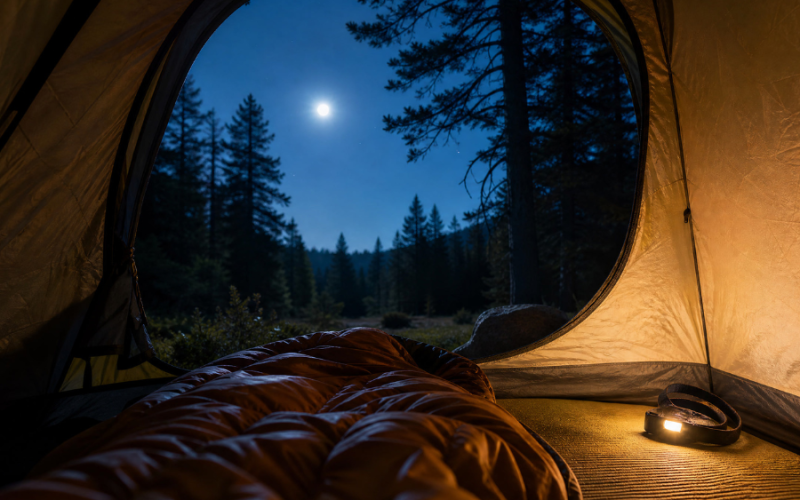
You know the feeling. You’ve set up a good site, the gear is dialled, you’re actually tired, and you still lie there half awake listening to every sound outside the tent. Then night two comes along and you sleep like a rock. Same site, same gear, same everything.
For years I figured that was just me being wound up from the drive or overthinking the trip. Turns out there’s an actual name for it, and there’s real science behind why it happens.
Table of Contents
Your Brain Is Standing Watch
Sleep researchers call it the first-night effect. It’s been known about for decades, mostly as an annoyance in sleep labs, since the first night of data from any study was always garbage compared to the rest. People took longer to fall asleep, woke up more often, and got less deep sleep. Researchers just built an extra “adaptation night” into their studies and worked around it.
A team at Brown University decided to actually dig into why it happens instead of just factoring it out. What they found is genuinely wild. On the first night in a new place, one brain hemisphere stays more awake than the other during deep sleep, essentially in a state of readiness for trouble. The hemisphere that’s sleeping less deeply also responds more strongly to unusual sounds, and it wakes you up faster when it picks something up.
By the second night, that asymmetry is gone. Your brain has decided the place is fine and lets you sleep properly.
Some birds and marine mammals do a more extreme version of this, sleeping with literally half the brain at a time so they can keep watching for predators. What humans do is a much milder version of the same idea, but it’s the same basic mechanism. Sleeping outdoors in an unfamiliar spot is exactly the situation that system evolved for.
So if you’re lying in your tent at 2am tracking every branch crack outside, that’s not anxiety and it’s not you being soft about it. That’s a survival system doing what it was built to do.
Why Camping Makes It Worse
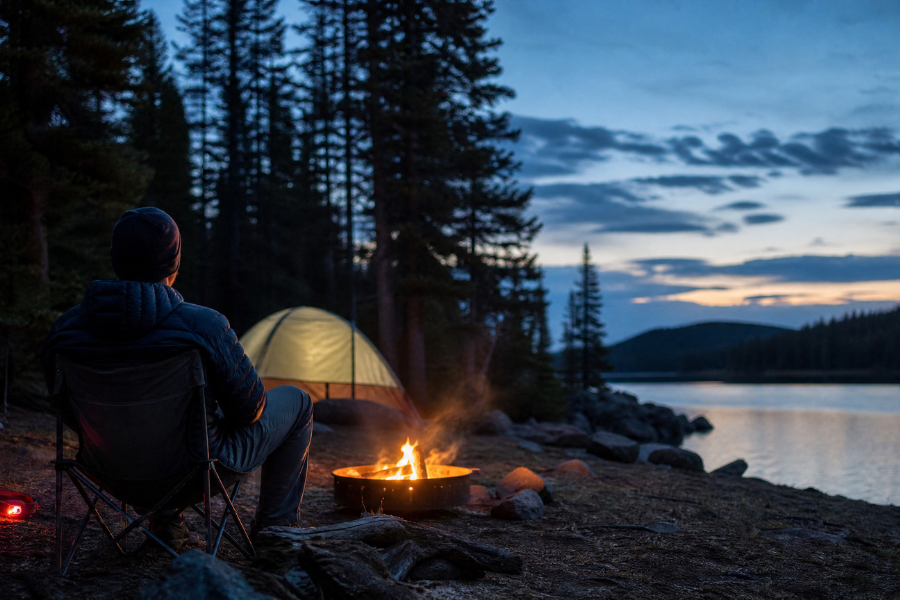
The first-night effect shows up in hotels and spare bedrooms too, but camping stacks a few things on top of it.
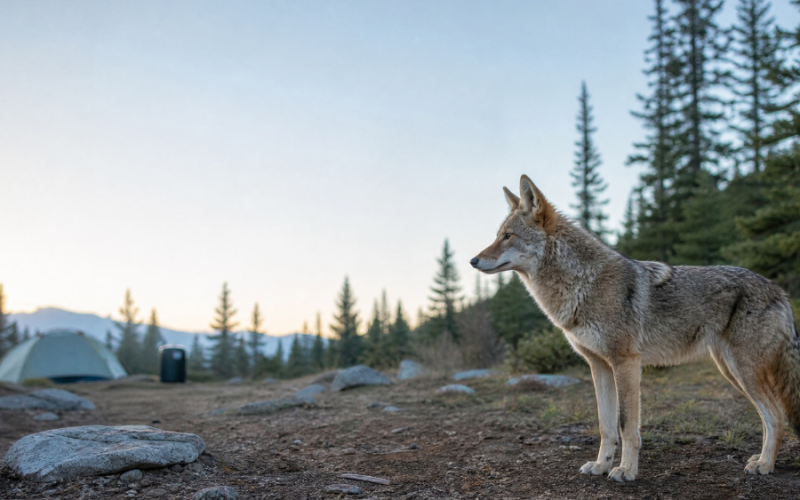
You’re separated from the outside by a layer of thin fabric. Every sound gets through, and there are a lot more sounds out there than at home. Wildlife, wind, other campers, your own gear shifting. The vigilant part of your brain has a lot more material to work with.
Temperature swings don’t help either. Even if you’re warm enough overall, drifting from too warm to too cool over the course of the night pulls you toward the surface of sleep repeatedly. Add an unfamiliar sleeping position on a pad that isn’t your mattress, and you’ve got a few different things all nudging you awake.
What Actually Helps
You can’t turn the first-night effect off. It’s hardwired. But you can reduce how much material your brain has to react to, and that makes a real difference.
Earplugs are the single highest-impact thing on this list, and they cost almost nothing. If your vigilant hemisphere can’t hear the deviant sounds, it can’t wake you up over them. Foam plugs work fine. I’d rather deal with the slightly odd feeling of sleeping with plugs in than lose half a night’s sleep to a squirrel rummaging around outside.
Site selection matters more than people give it credit for. Wind hitting your tent fly directly generates constant noise. Setting up with some natural wind protection cuts that down significantly. Same goes for being away from busy areas of a campground or from moving water, which sounds peaceful in the abstract and is genuinely loud when you’re trying to sleep.
Get your temperature dialled before you get in the bag rather than after. A properly rated pad matters as much as the bag here, cause cold coming up from the ground is what usually wrecks the second half of the night. If you’re between seasons and unsure, bring the extra layer and take it off if you don’t need it.
Familiarity helps, which is a slightly annoying thing to hear when you’re on a one-night trip. But it’s why the same pillow, the same sleep clothes, and the same routine every trip actually pays off. You’re giving your brain fewer unfamiliar variables to sort through. A camp pillow you use every single time is worth more than the specs suggest.
Do your setup before dark if you possibly can. Arriving late and scrambling means you’re getting into your bag wired, and you’ve had no chance to actually look around and get familiar with where you are. Being able to see your surroundings before you sleep in them seems to take some of the edge off.
Final Thoughts
If you know the first night is going to be rough, stop building trips that depend on it not being rough.
Don’t schedule your longest, hardest day for day two of a trip. Give yourself some slack in the morning after night one. And if you’re doing a single overnight, just accept that you’re probably not sleeping well and enjoy the trip anyway.
The first-night effect isn’t a problem to be solved. It’s a feature of being a mammal that sleeps outside. Once you know what’s happening, it stops being frustrating and starts being kind of interesting. Your brain is doing exactly what it’s supposed to do. You just happen to be somewhere safe enough that it doesn’t need to.