
Table of Contents
Introduction: A Nation Born in the Wild
On July 4, 1776, fifty-six men signed their names to a document that changed the course of human history. They declared that freedom was not a privilege to be granted by kings, but a birthright to be defended by citizens. The ink was barely dry before those citizens turned their eyes westward, toward a continent of staggering, untamed beauty—a wilderness so vast and so magnificent that it would, over the next 250 years, become as central to the American identity as the Declaration itself.
The story of America’s outdoor heritage is not a footnote to our national history. It is the story itself. It is the tale of explorers who mapped rivers no European had ever seen, of hunters who funded the return of species from the edge of extinction, of conservationists who fought to preserve wild places for generations yet unborn, and of ordinary families who found something essential and irreplaceable around a campfire beneath a canopy of stars. As we celebrate the 250th anniversary of the United States, we honor not only the founding ideals of liberty and justice, but the wild landscapes that gave those ideals room to breathe.
“…that in wildness is the preservation of the world.” — John Muir
America’s outdoor heritage is a living inheritance. Every national park, every public forest, every scenic trail, every restored elk herd, and every pristine trout stream is a gift passed down through generations of stewards who understood that the land was not merely a resource to be consumed, but a legacy to be protected. This is their story—and it is ours.
The Frontier: Where the American Character Was Forged
Independence and the Wilderness
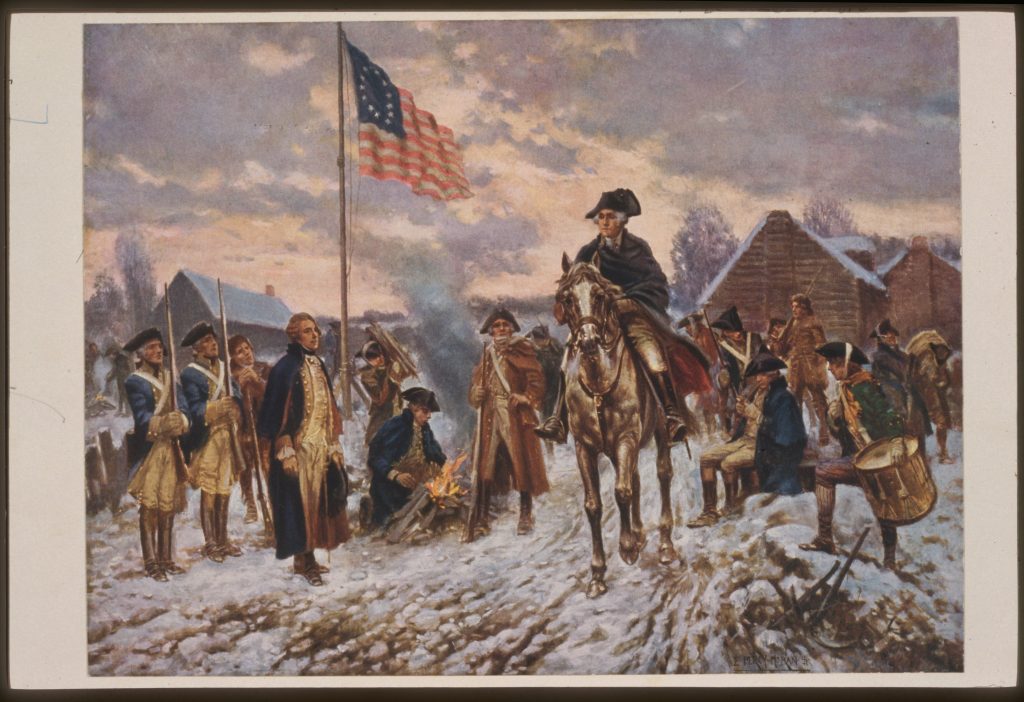
When George Washington led his ragged Continental Army through the brutal winter at Valley Forge, he was drawing on a quality that the American wilderness had already instilled in the colonial character: resilience. The men who founded this nation were not strangers to the outdoors. They were farmers, hunters, woodsmen, and surveyors who had spent their lives in intimate relationships with the land. Thomas Jefferson, who penned the Declaration of Independence, was also a passionate naturalist who filled his journals with observations of plants, animals, and the rhythms of the natural world.
Independence mattered because it granted the liberty to explore, to settle, and to build a life in a landscape of extraordinary possibility. The frontier was not just a geographic reality; it was a psychological one. It was the place where a person could start over, where the hierarchies of the Old World dissolved in the face of the practical demands of survival and self-reliance. The wilderness shaped the American character long before any government codified it.
Lewis, Clark, and the Corps of Discovery
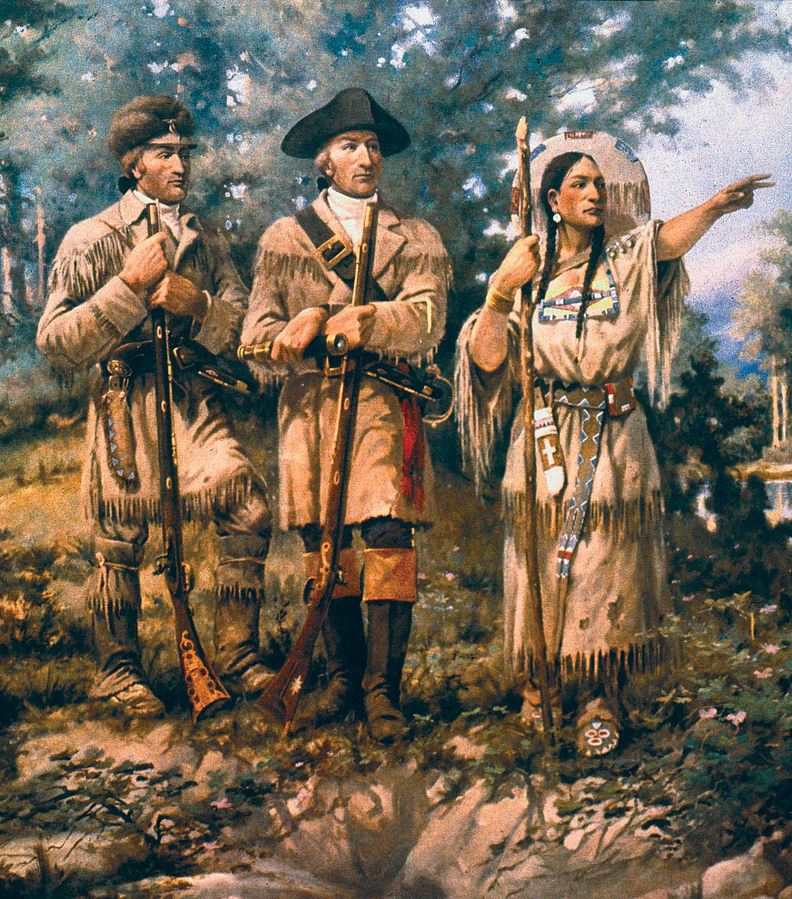
In 1804, President Jefferson dispatched Meriwether Lewis and William Clark on the most ambitious expedition in American history. Their charge was to explore the lands of the Louisiana Purchase—a territory that had nearly doubled the size of the young nation—and to find a route to the Pacific Ocean. The Corps of Discovery traveled nearly 8,000 miles over the course of two years, traversing the Great Plains, crossing the Rocky Mountains, and descending the Columbia River to the sea.
What they found was a continent of breathtaking biological richness. Lewis documented 178 plant species and 122 animal species previously unknown to science, including the pronghorn antelope, the grizzly bear, and the prairie dog. They mapped rivers, mountain passes, and landscapes that would guide the westward migration of millions of Americans in the decades to come. The Lewis and Clark Expedition was not merely a scientific or military mission; it was the opening chapter of America’s love affair with its own wild interior.
The Settling of the West
The 19th century saw the great westward migration, as Americans pushed across the Mississippi, over the Rockies, and onto the Pacific Coast. The Rocky Mountains, the Sierra Nevada, the high deserts of the Great Basin—these landscapes were not obstacles to be overcome, but proving grounds for the American spirit. Pioneers, mountain men, and homesteaders discovered a continent of staggering diversity, from the towering redwoods of California to the vast grasslands of the Great Plains, where bison once roamed in herds numbering in the tens of millions.
It was also an era of profound loss. The near-extermination of the American bison, the destruction of vast forests, and the unregulated hunting of waterfowl and game birds brought many species to the brink of extinction. But from this crisis emerged something remarkable: the world’s first conservation movement.
The Conservation Revolution: Protecting America’s Wild Places
Theodore Roosevelt and the Birth of Conservation
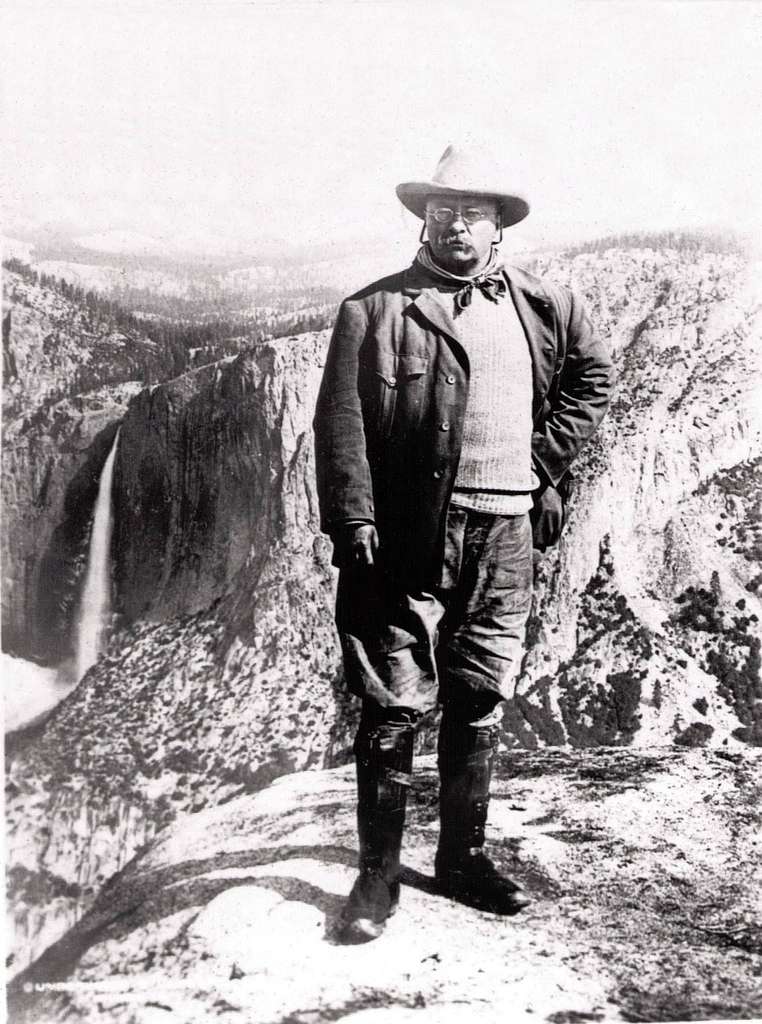
No figure in American history has done more for the outdoors than Theodore Roosevelt. A passionate hunter, naturalist, and outdoorsman from his youth, Roosevelt understood in his bones what many of his contemporaries were only beginning to grasp: that the natural resources of the United States were finite, and that their reckless exploitation would impoverish future generations.
As the 26th President of the United States, Roosevelt transformed the conservation landscape of the nation. Between 1901 and 1909, he established approximately 150 national forests, 51 federal bird reserves, four national game preserves, five national parks, and 18 national monuments, protecting over 230 million acres of public land. He signed the Antiquities Act of 1906, giving presidents the authority to protect areas of scientific and historical interest as national monuments—a tool that has been used by presidents of both parties to preserve iconic landscapes ever since.
“The nation behaves well if it treats the natural resources as assets which it must turn over to the next generation, and not impaired, in value.” — Theodore Roosevelt
Roosevelt’s conservation legacy was not the work of a politician; it was the passion of a man who had stood on the rim of the Grand Canyon and wept at its beauty, who had hunted elk in the Rockies and understood that the experience was only possible because someone had chosen to protect the land. His partnership with Gifford Pinchot, the first Chief of the U.S. Forest Service established the principle of scientific, sustainable management of public lands—a principle that remains the foundation of American conservation policy today.
The World’s Greatest National Park System
The establishment of Yellowstone National Park in 1872—the world’s first national park, signed into law by President Ulysses S. Grant—was a revolutionary act. For the first time in human history, a government set aside a vast tract of wild land not for the benefit of the wealthy or the powerful, but for the enjoyment of all people. The idea was so radical, so distinctly American, that it spread around the world.
Today, the National Park System encompasses over 400 sites across the country, from the geothermal wonders of Yellowstone to the ancient forests of the Great Smoky Mountains, from the granite cathedrals of Yosemite to the icy peaks of Denali. In 2024, these parks welcomed a record-breaking 331.9 million recreation visits—more than the population of the United States itself. Places like the Grand Canyon, Glacier National Park, the Everglades, and the Adirondacks are not merely beautiful; they are symbols of America’s commitment to preserving the best of what it has inherited.
| Iconic American Landscape | State(s) | Est | Notable Feature |
| Yellowstone National Park | WY, MT, ID | 1872 | World’s first national park; geothermal wonders |
| Yosemite National Park | CA | 1890 | Granite valleys, giant sequoias |
| Grand Canyon National Park | AZ | 1919 | 277-mile canyon, 1 mile deep |
| Great Smoky Mountains NP | TN, NC | 1934 | Most visited park in the U.S. |
| Glacier National Park | MT | 1910 | “Crown of the Continent” |
| Denali National Park | AK | 1917 | Highest peak in North America |
| Everglades National Park | FL | 1947 | Largest tropical wilderness in the U.S. |
| Appalachian Mountains | Eastern U.S. | — | Oldest mountain range in North America |
| Sierra Nevada | CA | — | Home of Yosemite and the PCT |
| Adirondacks | NY | 1892 | Largest park in the contiguous U.S. |
Hunters and Anglers: The Conservation Backbone of America
The Pittman-Robertson Act: A Conservation Miracle
One of the most remarkable and least-celebrated conservation stories in American history is the role that hunters and anglers have played in funding wildlife restoration. By the early 20th century, unregulated market hunting had devastated populations of white-tailed deer, wild turkey, elk, and waterfowl across the country. The response was not a government bailout, but a voluntary commitment by the hunting community to fund the recovery of the very species they loved to pursue.
The Federal Aid in Wildlife Restoration Act of 1937—better known as the Pittman-Robertson Act—established an excise tax on firearms, ammunition, and archery equipment, directing those revenues exclusively to state wildlife agencies for conservation, habitat restoration, and hunter education. Since its passage, hunters have contributed over $25 billion to wildlife conservation, funding the restoration of habitat, the reintroduction of species, and the education of generations of new hunters and conservationists.
The results speak for themselves. In 2025 alone, the Pittman-Robertson Act apportioned over $1.3 billion to state wildlife agencies. This is the North American Model of Wildlife Conservation in action—a uniquely American system in which wildlife is held in public trust, managed by science, and funded by those who use it most.
The Great Wildlife Recoveries
The conservation funding generated by hunters and anglers has produced some of the most dramatic wildlife recovery stories in history. The wild turkey, which had been reduced to fewer than 30,000 birds by the 1930s, has rebounded to an estimated 7 million birds today—one of the greatest wildlife restoration successes ever recorded. The Rocky Mountain elk, once hunted nearly to extinction, now numbers over 1 million animals across North America, with populations thriving from the Rockies to the Appalachians. Ducks Unlimited, founded in 1937, has conserved over 19 million acres of crucial wetland habitat across North America, providing breeding and wintering grounds for hundreds of species of waterfowl and other wildlife.
These recoveries did not happen by accident. They are the direct result of decades of investment, advocacy, and stewardship by the hunting and fishing community—proof that conservation and outdoor recreation are not in conflict, but are deeply and inextricably linked.
America’s Fishing Traditions
Fishing is woven into the fabric of American life. Nearly 58 million Americans—approximately one in six—wet a line in 2024, making recreational fishing one of the most popular outdoor activities in the country. From the trout streams of the Appalachians to the bass lakes of the South, from the salmon rivers of Alaska to the flats of the Florida Keys, fishing connects Americans to the water, to the land, and to each other.
The tradition of fishing with a child—of teaching patience, attentiveness, and respect for the natural world—is one of the most enduring forms of outdoor education in America. It is a tradition that transcends geography, income, and background, offering anyone with a rod and a body of water access to the same experience that has captivated Americans since the first colonists cast their lines in the rivers of the New World.
Trails, Peaks, and the Backpacking Revolution
The Appalachian Trail: America’s Footpath
In 1921, a forester and regional planner named Benton MacKaye published an essay proposing the creation of a continuous footpath along the spine of the Appalachian Mountains, from Georgia to Maine. His vision was not merely recreational; it was social and philosophical. MacKaye believed that a long trail through wild country could serve as an antidote to the alienation and stress of industrial life, offering Americans a place to walk, to think, and to reconnect with the natural world.
The Appalachian Trail, completed in 1937 and stretching over 2,190 miles, became the world’s longest hiking-only footpath and the template for the American long-trail movement. Today, millions of hikers walk some portion of the AT each year, and thousands attempt the full thru-hike—a journey of five to seven months that has become a rite of passage for a generation of outdoor enthusiasts.
The Pacific Crest Trail: From Desert to Glacier
On the opposite coast, Clinton C. Clarke conceived the Pacific Crest Trail in the 1930s—a 2,650-mile route from the Mexican border to the Canadian border, traversing the deserts of Southern California, the volcanic peaks of the Cascades, and the granite wilderness of the Sierra Nevada. The PCT received official recognition under the National Trails System Act of 1968, signed by President Lyndon Johnson, which also established the framework for a national network of scenic, historic, and recreation trails.
Together, the AT and the PCT represent the pinnacle of American hiking culture—epic journeys through some of the most spectacular landscapes on Earth, open to anyone with the will and the boots to walk them.
Climbing America’s Peaks
America’s climbing legacy is as rich as its trails. From the first ascents of the granite walls of Yosemite Valley to the summit of Denali—the highest peak in North America at 20,310 feet—American climbers have pushed the boundaries of what is possible in the mountains. The culture of mountaineering and rock climbing that emerged in the mid-20th century, centered on the meadows and walls of Yosemite, produced not only world-class athletes but a philosophy of adventure, self-reliance, and respect for the natural environment that has influenced outdoor culture around the world.
Camping, Families, and the American Outdoor Tradition
The Campfire as Community
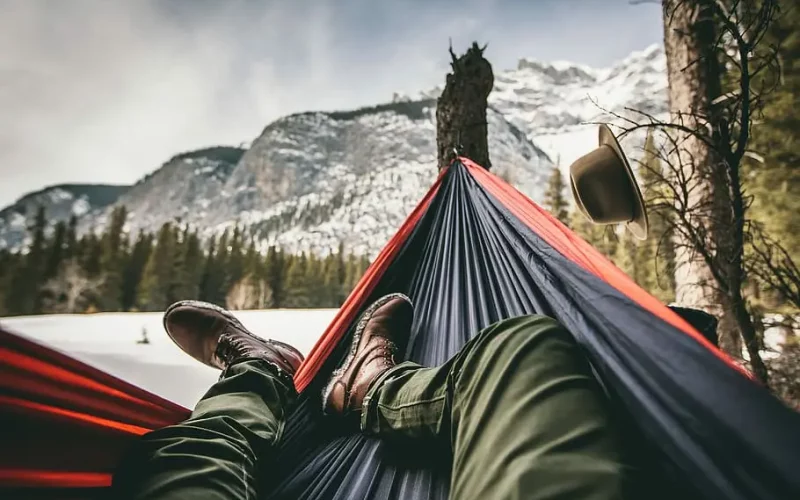
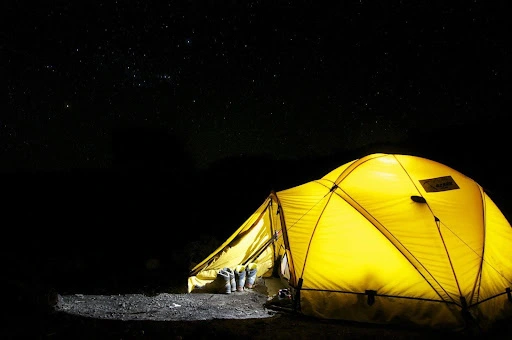
There is something ancient and essential about a campfire. Long before the first national park was established, before the first trail was blazed, before the first fishing license was sold, human beings gathered around fires in the open air and told stories, shared food, and found comfort in each other’s company. Camping in America has always been about more than sleeping in a tent; it is about creating the conditions for a different kind of human connection.
Today, tens of millions of American households camp each year, from car campers in state parks to backcountry adventurers in remote wilderness areas. The camping industry has grown dramatically in recent decades, driven by a growing recognition that time in nature is not a luxury but a necessity—for mental health, for family cohesion, and for the development of the next generation of conservation stewards.
Healing in the Wild: Veterans and the Outdoors
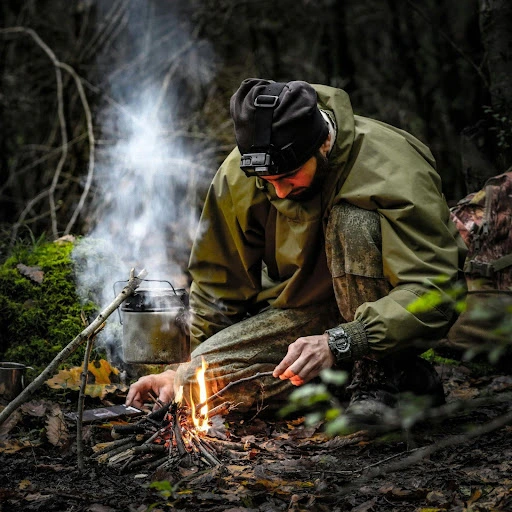
For generations of American military veterans returning from conflict, the outdoors has offered something that no medication or therapy session alone can provide: the healing power of wild places. Research has consistently demonstrated that time in nature reduces the symptoms of PTSD, improves psychological well-being, and fosters a sense of community and purpose among veterans.
Programs that use outdoor recreation—fly fishing, hunting, hiking, paddling—as therapeutic tools have proliferated across the country, recognizing that the land these men and women fought to protect also has the power to help them heal. The connection between military service and outdoor stewardship runs deep in American culture; many of the nation’s most dedicated conservationists have been veterans who found in the wilderness the same qualities of discipline, camaraderie, and purpose that defined their service.
The Economic Power of America’s Outdoor Heritage
A Trillion-Dollar Legacy
America’s outdoor heritage is not only a cultural and spiritual treasure; it is an economic engine of extraordinary power. According to the Bureau of Economic Analysis, the outdoor recreation economy generated $1.3 trillion in gross output in 2024, accounting for 2.4 percent of U.S. GDP and supporting 5.2 million jobs across the country. From the manufacturers of hunting rifles and fly rods to the outfitters, guides, and hospitality businesses that serve outdoor enthusiasts, the outdoor recreation industry sustains communities in every corner of the nation.
Public lands are at the heart of this economic story. The Bureau of Land Management alone stewards approximately 245 million acres of public land, generating billions of dollars in economic activity through recreation, tourism, and resource management. The National Park System contributes billions more, supporting gateway communities that depend on the steady flow of visitors to parks like the Great Smoky Mountains, Yellowstone, and the Grand Canyon.
| Outdoor Recreation Economic Snapshot (2024) | Figure |
| Total Gross Output | $1.3 trillion |
| Value Added (% of U.S. GDP) | $696.7 billion (2.4%) |
| Jobs Supported | 5.2 million |
| Pittman-Robertson Act Apportionment (FY2025) | $1.3 billion |
| National Park Visits (2024) | 331.9 million |
| Americans Who Fish (2024) | ~57.9 million |
| Ducks Unlimited Acres Conserved | 19+ million |
Innovation, Resilience, and Stewardship
The outdoor recreation industry is also a driver of innovation. From the development of lightweight backpacking gear to advances in sustainable materials, from the growth of outdoor apparel to the rise of adventure tourism, the outdoor economy rewards creativity and rewards those who can help people experience the natural world more safely, more comfortably, and more sustainably. The values of the outdoors—resilience, self-reliance, stewardship, and adventure—are the same values that have driven American innovation for 250 years.
Connecting History to Today: Your Chapter in America’s Story
The Legacy Continues
The story of America’s outdoor heritage is not a story of the past. It is being written right now, by every hiker who steps onto a trail, every angler who teaches a child to cast, every hunter who brings a non-hunter to a hunters safety course and every family that pitches a tent under the stars.
The Appalachian Trail, the Pacific Crest Trail, and dozens of other National Scenic Trails invite you to walk in the footsteps of generations of Americans who found freedom, healing, and inspiration in the wild. The national parks—those “best ideas” America ever had, as the writer Wallace Stegner called them—are waiting for you. The rivers, the mountains, the forests, and the prairies are part of your inheritance as an American citizen.
Modern outdoor enthusiasts continue the legacy of the Founding Fathers and the great conservationists in countless ways: hiking local trails, camping with family, hunting responsibly, fishing with children, exploring public lands, climbing mountains, mountain biking, paddling rivers, watching birds, and conserving wildlife. Each of these activities is an act of patriotism—a reaffirmation of the belief that the natural world is worth protecting, worth celebrating, and worth sharing.
“The mountains are calling, and I must go.” — John Muir
Conclusion: The Story Is Still Being Written
Two hundred and fifty years ago, a group of visionaries declared that freedom was worth fighting for. They could not have imagined the nation that would grow from that declaration—a nation that would one day protect 230 million acres of public land, restore millions of animals from the brink of extinction, build a 2,190-mile footpath along the spine of its oldest mountains, and welcome hundreds of millions of visitors each year to parks that belong to every citizen.
But they understood something essential: that the land and the people are inseparable. That freedom without wild places is diminished. That a nation which cannot protect its natural heritage cannot fully protect its human heritage.
 As we celebrate 250 years of American freedom, we celebrate not only the documents and the battles and the leaders who shaped our history, but the forests, the rivers, the mountains, the prairies, and the wild creatures that shaped our character. We celebrate the hunters who funded wildlife restoration, the conservationists who fought for public lands, the hikers who walked the long trails, the families who gathered around campfires, and the veterans who found healing in the wilderness.
America wasn’t built only in cities and halls of government. It was forged in forests, across rivers, atop mountains, around campfires, and under endless skies. As we celebrate 250 years of freedom, every hike, every hunt, every campsite, and every trail reminds us that the story of America is still being written—one adventure at a time.
Frequently Asked Questions About America’s Outdoor Heritage
Q: What was the first national park in America, and why does it matter?
Yellowstone National Park, established on March 1, 1872, by President Ulysses S. Grant, was the first national park in the United States and the first in the world. It matters because it established the revolutionary principle that some landscapes are so magnificent they belong to all people—a concept that has since been adopted by nations around the globe and that remains the foundation of America’s public lands system.
Q: How have hunters contributed to wildlife conservation in America?
Through the Pittman-Robertson Act of 1937, an excise tax on firearms, ammunition, and archery equipment funds state wildlife agencies for conservation, habitat restoration, and hunter education. Since its passage, hunters have contributed over $25 billion to wildlife conservation, helping to restore populations of white-tailed deer, wild turkey, elk, and many other species. In fiscal year 2025 alone, the program apportioned over $1.3 billion to state wildlife agencies.
Q: How much does outdoor recreation contribute to the U.S. economy?
According to the Bureau of Economic Analysis, the outdoor recreation economy generated $1.3 trillion in gross output in 2024, representing 2.4 percent of U.S. GDP and supporting 5.2 million jobs across the country.
Q: What role did Theodore Roosevelt play in shaping America’s outdoor heritage?
President Theodore Roosevelt is widely regarded as the “Conservation President.” During his presidency (1901–1909), he protected over 230 million acres of public land, establishing 150 national forests, 51 federal bird reserves, four national game preserves, five national parks, and 18 national monuments. His legacy is the foundation of America’s modern public lands system.
Q: What are the longest hiking trails in America?
The Appalachian Trail, stretching over 2,190 miles from Georgia to Maine, and the Pacific Crest Trail, spanning 2,650 miles from the Mexican border to the Canadian border, are the two longest and most celebrated hiking trails in the United States. Both are designated National Scenic Trails under the National Trails System Act of 1968.
Q: How can I connect with America’s outdoor heritage today?
The best way to connect with America’s outdoor heritage is to get outside. Visit a national park, hike a local trail, go fishing with a friend or family member, camp under the stars, or simply take a walk in a public forest. Every outdoor experience connects you to the generations of Americans who explored, protected, and celebrated this land before you—and to the generations who will inherit it after.