Every hammock camper hits this question eventually. You are comfortable with your setup, you have had some good nights out, and then someone mentions an underquilt and suddenly you are wondering whether you have been doing it wrong the whole time. The short answer is that it depends entirely on when and where you camp. The longer answer is worth understanding before you spend the money.
I have hammock camped through enough Ontario seasons to have a clear opinion on this. An underquilt is not always necessary, but when you need one and do not have it, you will know immediately. Cold air from below is one of the most effective ways to ruin a night in a hammock, and a sleeping bag alone is not always enough to deal with it.
Table of Contents
Why Cold Air Hits Different in a Hammock
To understand why an underquilt matters, you need to understand what happens to your sleeping bag when you are lying in a hammock.
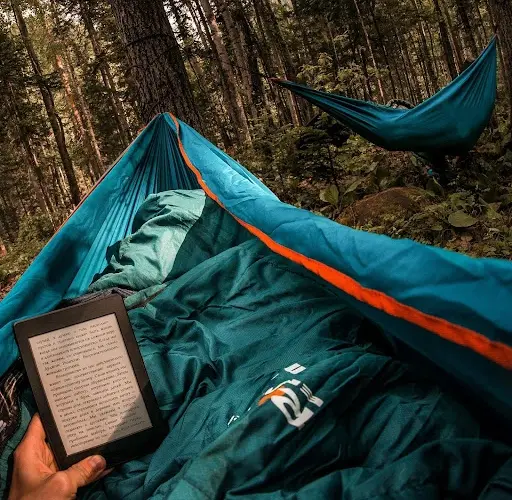
Sleeping bags insulate through the loft. The fill, whether down or synthetic, traps warm air in thousands of tiny pockets around your body. That system works well when you are lying on the ground. In a hammock, your body weight compresses the fill beneath you completely. Compressed insulation has almost no loft and almost no warmth. The bottom of your sleeping bag, the part sitting between you and the open air below, becomes little more than a thin layer of fabric.
Cold air circulates freely under a hammock. There is nothing to block it and nothing to slow it down. On a mild summer night this is barely noticeable. On a cool shoulder season night with any kind of breeze, you will feel it working against you within an hour of settling in.
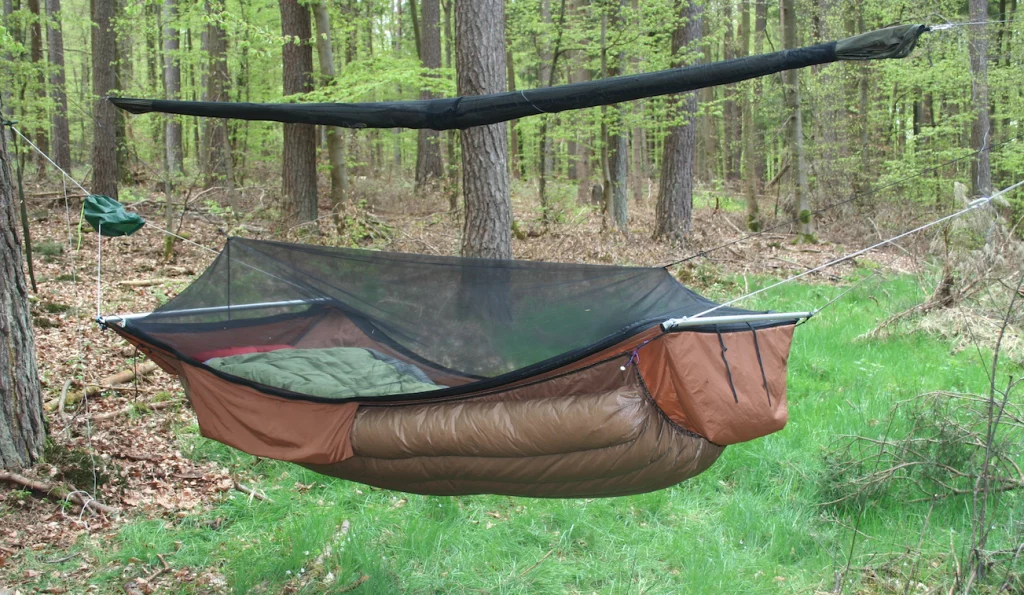
An underquilt hangs beneath the hammock and surrounds the bottom with insulation that never gets compressed. It does the job your sleeping bag cannot do from that position.
When You Can Get Away Without An Underquilt
If you are camping in genuinely warm conditions, an underquilt is not necessary. Summer nights in Ontario where overnight temperatures are staying above fifteen degrees Celsius and there is minimal wind are comfortable in a hammock with a sleeping bag and nothing else. Many people hammock camp through July and August without ever thinking about an underquilt and sleep perfectly well.
The same applies to short trips where you have checked the forecast carefully and you know conditions are going to stay mild. A well-rated sleeping bag in warm weather will keep you comfortable, and the underquilt adds weight, bulk, and cost that you simply do not need.
If you are a warm sleeper, your window without an underquilt extends a little further. People who run cold will feel the floor drop out sooner than people who sleep warm.
When You Genuinely Need One
Once overnight temperatures start dropping below ten degrees Celsius, an underquilt moves from optional to important. This covers most of spring and fall camping in Ontario and virtually all of the shoulder season trips that tend to be the best ones. Fewer people on the trails, better colours, quieter campsites. The weather is also less forgiving.
Wind is the other factor. Even on a night that looks warm on paper, consistent wind moving under your hammock pulls heat away faster than still air. If you are camping in an exposed site or anywhere with regular overnight breezes, an underquilt gives you a meaningful buffer.
Anyone planning to extend their hammock camping into temperatures below five degrees needs an underquilt without question. At that point it is not a comfort item. It is a core piece of your sleep system.
What to Look for If You Decide to Buy
Temperature rating is the starting point. Underquilts are rated similarly to sleeping bags, and the same rules apply: the stated rating is a limit, not a comfort zone. If you are camping in temperatures that drop to five degrees, buy an underquilt rated below that. A ten degree rating will leave you cold.
Fill type matters. Down underquilts are lighter and pack smaller, which is relevant if you are covering ground on foot. Synthetic fill performs better in wet conditions and is generally less expensive. For car camping or short carries, synthetic is a practical and cost-effective choice. For longer trips where pack weight and moisture management matter, down is worth the investment.
Coverage is something people overlook when buying their first underquilt. A full-length underquilt covers you from shoulders to feet. A shorter torso-length option saves weight but leaves your legs exposed. In mild conditions this is fine. In colder temperatures you want full coverage.
Attachment systems vary between brands and hammock models. Before you buy, check that the underquilt you are looking at is compatible with your hammock or uses a universal attachment system. Most do, but it is worth confirming before you spend the money.
Final Thoughts
You do not always need an underquilt. But if you are hammock camping past the height of summer, camping in variable conditions, or planning trips into the shoulder seasons, it is one of the most impactful pieces of gear you can add to your system. The difference between a night with one and a night without one in cool temperatures is not subtle. Once you have slept with a properly rated underquilt on a cold night, it becomes one of those pieces of kit you stop leaving behind.