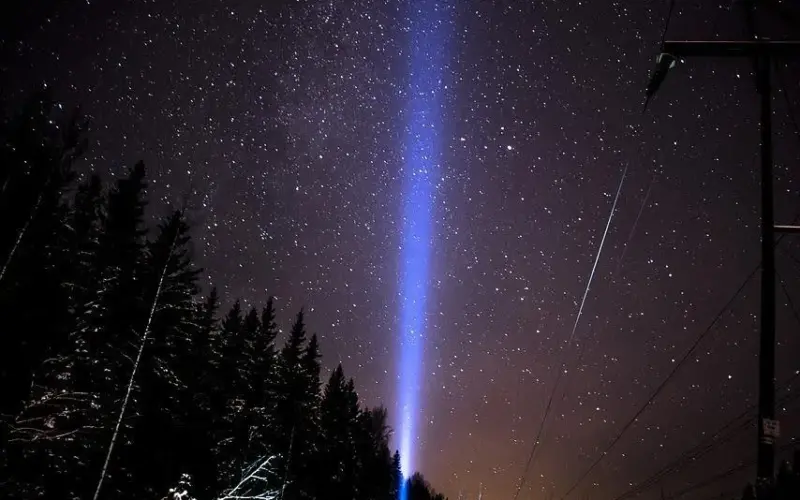
Nobody plans to arrive after dark. It just happens. A longer drive than expected, a trailhead that was harder to find than the map suggested, a day hike that stretched well past sunset. And suddenly you are standing in a field or a forest with a headlamp strapped to your forehead, squinting at a pile of gear, wondering how you’re going to set it all up.
Honestly, it is one of my least favourite camp scenarios. There is something about setting up in the dark that feels like doing everything on hard mode. In daylight you can read the site, spot the low ground, see where the roots are, check the tree line for dead branches overhead. At night you are working with a narrow cone of light and a lot of guesswork. I would rather be watching the site come together in the afternoon sun than fumbling with tent poles at ten o’clock. But sometimes you do not get to choose, and when that happens, having a system makes all the difference.
Table of Contents
Your Site Choice Matters More Than Your Gear
The single most important thing you can do when arriving at camp after dark is resist the urge to just drop your gear and start setting up wherever you are standing. That impulse is understandable. You are tired. You want to be done. But five minutes of walking the site with your headlamp will save you a miserable night.
What you are looking for is simple. You want ground that is relatively flat and free of large rocks and roots. You want to be away from obvious low spots where water collects if it rains overnight. You want natural wind protection if the weather is moving, but not so much overhead canopy that dead branches are a concern. You want to be close enough to your vehicle or your water source that you are not making long trips in the dark with a loaded pack.
The mistake most people make is setting up on the first acceptable patch of ground they find. Acceptable at ten pm with a headlamp and tired legs is not the same as acceptable. Spend the time. Walk a slightly wider circle than feels necessary. The extra few minutes are worth it every single time.

Set Up in the Right Order
When you are tired and working in the dark, the temptation is to do things in whatever order they come to hand. Resist that too. Having a consistent setup sequence means you are not making decisions at the moment you are least equipped to make them.
Shelter goes up first. Always. Everything else can wait, including food, including organizing your pack, including finding your camp chair. If the weather moves in or you are more exhausted than you realized, you need a place to sleep above everything else. Get the tent up, get the sleeping pad and bag inside, and then everything else becomes optional in the short term.
Water is next if you need to filter or treat before drinking. Do it while you still have the energy and the mental clarity to do it correctly. Skipping this step because you are tired is how people end up dehydrated the next morning. Obviously you won’t need to do this if you brought all of your water along.
Food is last. If it is genuinely late and you are not hungry, you do not need to cook. A simple snack and some water is enough to get you through the night. Save the full camp kitchen setup for the morning when you can see what you are doing.
Use Your Headlamp the Right Way
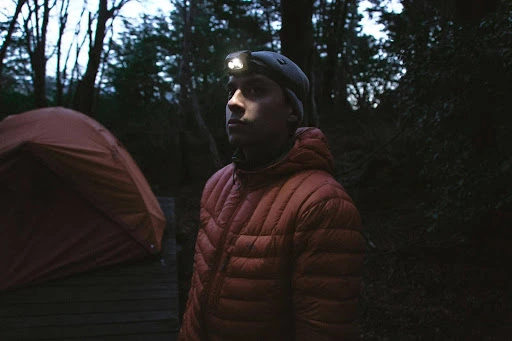
A headlamp on full brightness pointed straight ahead is actually one of the less useful configurations for setting up camp. It creates a bright cone directly in front of you and leaves everything in your peripheral vision in complete darkness. Your eyes never fully adjust because the light is too intense and too narrow.
A few adjustments make a significant difference. Drop the brightness to a medium setting. Your eyes will adjust further and you will actually see more of the area around you. If your headlamp has a red light mode, use it for general camp movement. Or even use other light modes. Red light preserves your night vision far better than white light and is easier on your eyes over an extended period.
For close work like staking out a tent or sorting gear, tilt the lamp downward so the beam hits the ground in front of you rather than projecting straight out. This gives you a wider pool of usable light at ground level where you actually need it.
Keep the Important Stuff Accessible
This one starts before you leave home. If you know there is any chance of a late arrival, pack your shelter, sleeping pad, sleeping bag, and headlamp where you can reach them without unpacking everything else. The last thing you want at midnight is pulling gear out of a fully loaded truck bed trying to find your tent poles at the bottom of a dry bag.
A simple habit: anything that needs to come out first goes in last when you are loading up. It takes thirty seconds of extra thought at home and saves real frustration in the dark.
It Gets Easier
The first time you set up camp after dark it feels chaotic. The fifth time it feels manageable. The twentieth time it is just another part of the trip. Experience builds a kind of muscle memory around the whole process. You stop second-guessing the sequence, you stop fumbling with unfamiliar gear, and you stop wasting energy on frustration.
The goal is not to love arriving after dark. It is to be competent enough that it does not ruin the trip. A good site, a smart setup order, a headlamp used properly, and gear you can find when you need it. That is the whole system. It is not complicated, and it works every time.