Most people file altitude sickness under “Everest problems.” Something that happens to expedition climbers who’ve been at 25,000 feet for three weeks, not to someone who drove up a mountain road on a Saturday morning and planned to be back for dinner. That assumption sends a surprising number of otherwise healthy hikers home early, or keeps them hunched over at a trailhead wondering why a moderate hike just destroyed them.
The truth is that altitude sickness doesn’t wait for extreme elevation. It starts showing up at heights that a lot of popular day-hike destinations clear comfortably.
Table of Contents
Where the Threshold Actually Is
The number most physicians use is 8,000 feet. Above that, the air contains meaningfully less oxygen per breath – not drastically less, but enough that your body has to work harder to maintain the same output. For most people who live at or near sea level, that adjustment doesn’t happen automatically. It takes time.
The problem with day hiking is that you don’t give yourself that time. You drive from Denver at 5,000 feet to a trailhead at 10,500 feet, lace up your boots, and start moving uphill. Your lungs are doing their best, but they’re behind on the math. By the time you’ve gained another 1,500 feet of elevation, you’re at an altitude your body genuinely hasn’t accustomed to yet.
Colorado’s 14ers are the obvious example, but you don’t need to summit a fourteener for this to become your problem. A lot of trails in the Rockies, the Sierra Nevada, and the Cascades sit well above 9,000 or 10,000 feet at the trailhead. So does a significant chunk of New Mexico, Utah, and Wyoming hiking. Even if you’ve done these trails before at peak fitness, that fitness doesn’t protect you from altitude the way it protects you from fatigue.
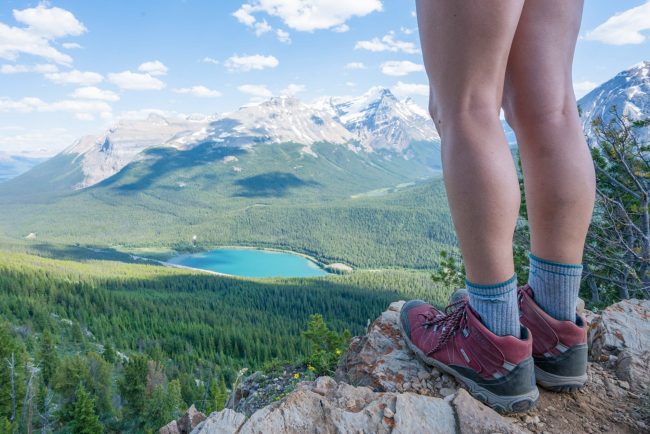
What It Actually Feels Like
Acute Mountain Sickness – AMS, to use the clinical term, presents as a headache, usually starting at the forehead or temples, combined with some combination of nausea, fatigue, dizziness, and a general sense that something is wrong without being able to put your finger on it. The headache is the signature symptom. If you develop a dull, persistent one within hours of gaining significant elevation, that’s more than likely AMS.
What makes it easy to miss is that these symptoms overlap heavily with dehydration and over-exertion, which are also common on big hiking days. A lot of people drink an extra liter of water, chalk it up to pushing too hard, and keep going. Sometimes that works. Sometimes it doesn’t, and the symptoms worsen into something that genuinely requires you to descend.
The more serious forms – High Altitude Pulmonary Edema (HAPE) and High Altitude Cerebral Edema (HACE), are rare on a typical day hike but not impossible, especially if someone pushes through worsening AMS symptoms instead of turning around. Shortness of breath at rest, confusion, loss of coordination, or a cough that produces frothy or pink fluid are all signals to get down immediately.
What Actually Puts You at Risk
Not everyone gets altitude sickness, and there’s no clean predictor of who will. Fitness level, age, and prior altitude experience all matter less than you’d expect. The biggest factors are your rate of ascent and where you slept the night before.
Driving to a high-elevation trailhead and immediately hiking upward is about the fastest way to load the dice against yourself. Your body needs roughly 24 to 48 hours to begin meaningful acclimatization at a given altitude. If you fly into a mountain city, sleep there one night, and hike the next morning, you’ve given yourself a partial buffer. If you flew in yesterday afternoon and hit the trail this morning, you probably haven’t.
Alcohol and sedatives slow acclimatization and interfere with how your body breathes during sleep. A night at altitude with a few drinks in your system can leave you more depleted in the morning than you’d expect.
Hydration matters, though not in the way people often think. Drinking more water doesn’t prevent altitude sickness, but being dehydrated makes the symptoms worse and harder to distinguish from the altitude effects themselves. Staying well hydrated is just good practice, not a cure.
What You Can Actually Do About It
The most reliable avoidance is time, which costs nothing except planning. If you’re coming from a low elevation to hike at a high altitude, spending a night or two at an intermediate elevation before your big day out makes a genuine difference. For example, sleep at 7,000 feet before hiking to 13,000 feet and you’ll feel the gap less.
Ascending slowly once you’re on trail also helps. This is counterintuitive when you’re feeling fine at the trailhead, but the symptoms of AMS often lag your actual ascent by an hour or two. You can feel perfectly normal at 10,000 feet and be in real trouble by noon. If you’re going above 8,000 feet from a low starting point, pace yourself like the altitude is already a factor, even if it doesn’t feel like one yet.
The one rule that should override everything else: if your symptoms are getting worse while you’re still ascending, go down. Not after the next switchback, not after lunch. Down. Altitude sickness reliably improves with descent, usually within an hour or two. It reliably gets worse if you keep climbing.
Final Thoughts
The hikers who get into real trouble with altitude aren’t usually the ones who ignored the warnings. They’re the ones who didn’t know the warnings applied to them. They felt fine at the trailhead, they’ve done plenty of hikes. The mountain looks nothing like Everest.
That’s exactly when altitude sickness does its best work. It shows up uninvited, on a perfectly clear day, on a trail you had every reason to expect you could handle. Knowing it exists at day-hike elevations, and knowing what to do when it shows up, is the difference between a story you tell at dinner and one that ends with a call to search and rescue.